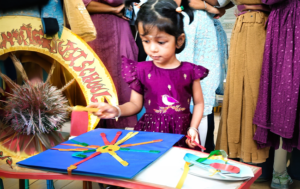

Every choice we make, right from what to eat for breakfast to which career to pursue, begins with a decision. For children, decision-making skills lay the foundation for independence, self-confidence, and critical thinking. At an early age, children decide which toys to play with or which friend to sit beside. As they grow, these decisions become more complex, influencing their academics, relationships, and even future careers.
This blog discusses how parents and educators can help children develop decision-making skills to evaluate situations, consider consequences, and act with confidence.
1. Start Early with Everyday Choices
The journey towards developing decision-making skills begins in childhood. Allowing young kids to make age-appropriate choices helps them understand that actions have consequences. For example, letting a child choose between two healthy snacks or deciding what book to read before bed cultivates autonomy and also mindful choice-making.
“Start teaching your young child how to make decisions by giving them two options, both of which you are okay with them selecting,” says child development expert Grace Berman, LCSW. It empowers children and pushes them to maintain healthy boundaries.
Even small decisions, as simple as finishing homework in the evening or the morning, allow children to evaluate the pros and cons of the situation. Such micro-choices help them build confidence for larger decisions later in life.
2. Show Them Your Decision-Making Process
Children learn best by observing. When parents and teachers discuss their reasoning out loud, they demonstrate how thoughtful decision-making works.
For instance, if you want to decide between yoga and running, talk to your child. Ask them, “Do you think running is better for me? Or should I go with yoga?” Allow your children to list the reasons, discuss them, and reach a joint decision.
Your child will notice everything—the way you consider options, weigh pros and cons, and assess impact—helping them hone their decision-making skills.
3. Offer Guidance When Needed
As children mature, adults must transition from decision-makers to facilitators. Give them the space to decide, but offer a sounding board for reflection. Psychologists call the process “scaffolding”, where adults provide structured support that gradually reduces as children gain competence.
For instance, if a child struggles with choosing clothes for school, offer two weather-appropriate options and let them decide. Praise their choice to reinforce confidence. Over time, it builds decisiveness, which becomes an irreplaceable part of their decision-making skills.
4. Encourage Introspection and Learning from Mistakes
Always tell your kids that not all decisions will lead to perfect results, and that’s the point. Letting children make mistakes helps them understand cause and effect. A child who forgets to pack their lunch learns to plan better next time.
“Children learn how to make good decisions by making decisions, not by following directions,” says education theorist Alfie Kohn. The experience of facing consequences, both positive and negative, strengthens emotional resilience and critical thinking.
At Vikaasa, educators incorporate introspection into classroom learning. Students journal, discuss, and evaluate their academic or personal choices, developing accountability and emotional maturity.
5. Ask Thought-Provoking Questions
Asking open-ended questions can help children analyse their reasoning. Try prompts like:
- “What do you like about the option?”
- “How will your choice affect others?”
- “What could you do differently next time?”
Such questions not only stimulate higher-order thinking but also help students weigh moral, emotional, and logical aspects of their decisions. It is a reflective practice that aligns with the IGCSE curriculum, encouraging learners to think critically and analytically.
6. Involve Them in Real-Life Decisions
Children gain valuable insights when they see decision-making in real life. Involve them in family discussions. It may include anything from planning vacations to making household purchases. When they evaluate trade-offs such as cost, preference, and timing, they learn that decisions are rarely black-and-white.
When they participate, the experience fosters a sense of ownership and responsibility. It also reflects real-world scenarios, such as gearing up for higher secondary admissions or college selection, where evaluating pros and cons is crucial.
7. Teach Core Values as a Compass
A strong value system is the anchor for sound decision-making. When children learn empathy, honesty, and responsibility, they make ethical choices even when unsupervised. Parents and teachers can discuss scenarios that challenge their moral reasoning. For example, if the children are debating whether to tell the truth, it is the adults’ responsibility to guide them through the implications of each choice.
At Vikaasa, values-based education is integral to shaping learners who can apply their moral compass to complex global contexts.
8. Always Reign In Your Freedom and Guidance
Children become successful when they are trusted to make choices, but that freedom should come with boundaries. Too much control stifles growth; too much freedom overwhelms. The balance lies in giving children room to think, decide, and reflect, knowing you will support them no matter the outcome.
Parents can start small: let children choose extracurricular activities or study schedules. Teachers can extend this by encouraging project-based learning that allows students to decide how to approach problems.
9. Praise Their Efforts
Positive reinforcement strengthens the link between effort and growth. When you praise a child’s decision-making process, they learn that good thinking matters as much as success. For example, “I like how you thought through your choices before deciding” is more potent than “Good job.”
At Vikaasa, educators celebrate process-driven learning because every wise decision starts with mindful thought.
10. Lead by Example
Finally, remember that children mirror adult behaviour. Demonstrate integrity, patience, and rational thinking in your own decisions. When they see consistency between what you say and what you do, they internalise these traits into their own decision-making framework.
Conclusion: Building Mindful Decision-Makers
From choosing what to wear to selecting a career path, every decision shapes who a child becomes. Schools and parents play a shared role in helping them recognise, evaluate, and own their choices.
As one of the top schools in Madurai, Vikaasa integrates real-world learning experiences that foster independence, ethical judgment, and confidence. Through reflection, collaboration, and guided exploration, students not only learn to make decisions but to make them wisely.