
Key Takeaways
- Fewer children per teacher usually means more attention for each one.
- The ideal student-teacher ratio is smaller for younger children.
- National averages look healthy, but every school is different.
- Count the heads yourself when you visit.
- A caring, well-trained teacher matters as much as the number.
Introduction
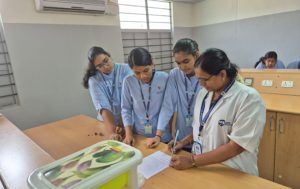
Think of the teacher who made you feel seen. She knew your favourite colour, noticed when you were quiet, and cheered when you finally got that sum right. Was it her wonderful memory? Quite possibly. Or perhaps she simply had fewer children to remember. Most likely, it was a bit of both.
Every teacher needs their time and a manageable number of children to pay proper care and attention to each and every one of them. That is exactly why a student-teacher ratio is important. Let us walk you through the basics. What is a student-teacher ratio? And so on.
What Is the Student-Teacher Ratio?
Put simply, it tells you how many students there are for every teacher. A school with 300 students and 15 teachers has a 20:1 ratio.
There are two versions, and they’re easy to mix up:
- School-wide ratio: all students divided by all teachers, including subject specialists.
- Classroom ratio: the children actually sitting in one room with one teacher.
The second one is what your child lives with every day, so ask for that.
Why Does Class Size Matter for Your Child?
- Attention: teachers notice quickly when a child is struggling.
- Feedback: notebooks get proper comments, not just ticks.
- Calm: a smaller group is easier to guide.
- Confidence: shy children find it easier to speak up.
- Safety: younger children need an adult close by.
That’s why a healthy student-teacher ratio is worth asking about, even when the building looks lovely.
What Does Indian Data Say About Teacher Availability?
The Ministry of Education’s UDISE+ 2024-25 report says India now has over one crore school teachers. Pupil-teacher ratios stand at 10 for the foundational stage, 17 for the middle stage and 21 for the secondary stage, as reported by The Statesman and ThePrint.
Still, these are national averages. Even among the best schools, Madurai, parents shortlist, the picture can vary. Your neighbourhood school may have a different ratio.
What Is the Ideal Student-Teacher Ratio at Each Stage?
The law sets a ceiling. The Right to Education Act, 2009 allows up to 30:1 in primary and 35:1 in upper primary, and NEP 2020 points towards 30:1.
| Stage | National average (UDISE+ 2024-25) | Official ceiling | Parent-friendly target |
| Foundational | 10:1 | 30:1 (RTE, primary) | 15:1 or lower |
| Middle | 17:1 | 35:1 (RTE, upper primary) | 25:1 or lower |
| Secondary | 21:1 | 30:1 (NEP guidance) | 25:1 or lower |
The last column is a friendly guideline, not a legal rule. For little ones, around 15:1 with an assistant feels comfortable. Later, 25:1 or lower works well. That gives you a sensible ideal student-teacher ratio to aim for.
How Can You Check the Ratio During a School Visit?
- Count the children in a couple of classrooms.
- Notice how many teachers and assistants are in the room.
- Ask if the figure you’ve been given is a school average or a class figure.
- Watch how the teacher moves around and who they speak to.
- Ask for the section strength of the grade you want.
Which Other Factors Matter Alongside the Ratio?
Numbers only tell part of the story. A student-teacher ratio can look perfect on paper, but the classroom can still feel rushed. So look at these too:
- Teacher training and experience.
- Classroom assistants for the early years.
- Lessons that involve every child.
- Teachers who stay for years.
- Space to move and play.
If you’re leaning towards the ICSE board, the top ICSE schools in Madurai are worth a look too. Whichever you choose, go and see it for yourself.
Where Can Madurai Parents Begin Their Search?
Madurai has plenty of choices, so a shortlist helps. If your child is very young, start with Play schools in Madurai and ask how many adults look after each group because toddlers need hands-on care.
Are you still deciding? Browse some of the good schools in Madurai, such as Vikaasa, and book a visit to explore our programmes and facilities and interact with our teachers to learn more.
Which Questions Do Parents Ask Most Often?
1. What is a good student-teacher ratio for nursery?
Around 10:1 to 15:1 with an assistant feels comfortable for the early years.
2. Is a lower ratio always better?
Not always. Skilled teachers and engaging lessons matter just as much.
3. Does the RTE Act fix class size?
It sets ratio norms of 30:1 for primary and 35:1 for upper primary.
4. How can I verify the ratio a school quotes?
Visit during school hours, count the children and ask for the section strength.