
Curiosity is one of the most potent motivators of early childhood learning. To nurture this natural instinct, educators worldwide are progressively utilising play-based learning as a structured approach for young children.
In fact, research has validated its efficacy.. A study conducted in Wales indicated that kids with play based learning until they were seven did better in school and were happier than kids who followed a regular curriculum.
In the following sections, we will explain the benefits of play based learning in detail.
What is Play-Based Learning?
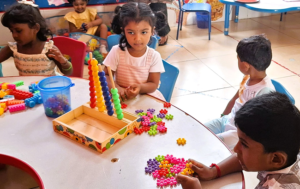
Play-based learning is an approach where children learn important concepts and skills through structured play activities. In contrast to traditional techniques that require kids to sit still and memorise, play based learning in early childhood education lets them find answers in a way that feels natural.
It includes:
- Role-playing
- Telling stories
- Solving puzzles
- Exploring outside
As children participate in these activities, they actively engage their minds and emotions to comprehend the world around them. This integrated process makes their learning more significant and enduring.
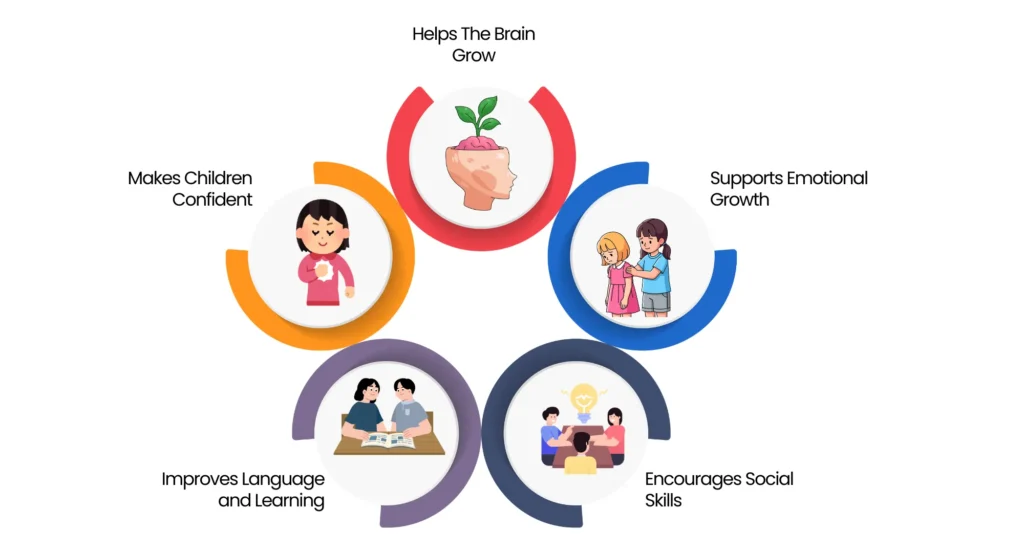
5 Main Benefits of Play-Based Learning
The importance of play based learning in early childhood education is as below:
1. Helps The Brain Grow
Play based learning can significantly improve the cognitive and problem-solving abilities of children. Even a simple activity like fitting shapes into a sorter introduces them to logical thinking. Over time, children acquire the ability to:
- Make choices
- Think creatively
- Identify solutions through trial and error
This is the reason why many nursery education programs include play-based learning in their curriculum.
2. Supports Emotional Growth
During their formative years, children require secure and constructive methods to comprehend and articulate their emotions. Play-based learning offers precisely that environment.
For instance, pretending to be a doctor in role-playing activities teaches the kids about patience and empathy.
3. Encourages Social Skills
One of the best advantages of play based learning is that it helps kids become more secure in social situations. Children acquire the ability to share, take turns, and resolve conflicts through participation in group activities. These interactions progressively assist them in developing a greater sense of self-assurance in social situations in the future.
4. Improves Language and Learning
Play-based activities, be it storytelling, singing, or role-playing, are proven to be effective in improving the communication skills of kids. It helps them:
- Express themselves
- Explain concepts simply
- Engage in dialogue
5. Makes Children Confident
The successful completion of a play-based assignment provides children with a sense of accomplishment. This improves their self-confidence and gradually promotes independence.
Since they frequently determine what and how to play, they develop the ability to make decisions and rely on their own judgment.
Why Play Based Learning Is Important In Schools?
The first few years of life are often described as the most critical for brain development, and science confirms it. As per neuroscience, 90% of a child’s brain develops by the age of five .This implies that the activities and experiences of these years significantly influence their future capabilities.
Schools that prioritise play based learning provide children with the best foundation. They develop greater emotional resilience and creative thinking skills through structured play.
Therefore, more modern schools are adopting this approach. Even in growing education hubs like schools in K Pudur Madurai, there is a visible shift toward adopting this balanced approach.
Conclusion
The most critical part of the early years is that children must continue to be curious, supported, and allowed to learn in a manner that is natural for them. True progress starts from this point.
At Vikaasa School, we strongly believe in the efficacy of play-based learning. Each child is encouraged to engage in structured activities and develop the confidence necessary to tackle new challenges.
Want to give the best possible academic start for your kid? Explore admissions at Vikaasa School.