
Writing is one of the most powerful habits a student can build. It strengthens thinking, enhances memory, boosts creativity, and builds confidence. Yet most students see writing as just another academic task. When we step back and explore what is writing, we realise it is not merely putting words on paper. It is a cognitive workout, a form of self-expression and a lifelong tool that shapes how children understand themselves and the world around them.
Educators worldwide, including those at some of the top ICSE schools in Madurai, emphasise writing because research consistently shows its positive impact on intellectual and emotional development. To better understand these impacts, let us explore the most influential theories that explain why writing is so beneficial for students.
Understanding writing through popular theories
-
Writing as thinking
One of the most critical theories in education is Jean Piaget’s Cognitive Development Theory. According to Piaget, children construct knowledge actively. They learn best when they break down information, reorganise it, and then express it in their own words. Writing requires students to analyse ideas and connect them meaningfully. This process helps them expand their thinking and deepen their understanding.
So, when we ask what is writing, Piaget’s theory reminds us that writing is a thinking tool. It pushes a student to observe, question, reflect and synthesise. Even a simple paragraph involves comprehension, reasoning and clarity. Over time, this habit improves academic performance across subjects.
-
Writing and the Vygotskian perspective
Lev Vygotsky believed that language shapes thought. His Sociocultural Theory explains how written language helps students organise ideas and build inner speech. When students write, they slow down their thoughts enough to articulate them clearly. This builds self-awareness, emotional regulation and clarity of expression.
This idea is closely linked to what is creative writing, because creative writing gives students the freedom to use language in expressive and imaginative ways. It becomes a space for personal identity development and emotional exploration. Vygotsky emphasised that language is a tool for empowerment, and writing strengthens that tool every day.
-
The expressive writing theory
Psychologist James Pennebaker developed the Expressive Writing Theory, which states that writing about personal thoughts or experiences reduces stress, improves mood and enhances mental clarity. Many students struggle with pressure, anxiety or emotional confusion. Writing provides a safe outlet for them to process their feelings and better understand themselves.
In the classroom, journaling or reflective notebooks help students become emotionally healthier, more conscientious, and better able to cope with challenges. This builds resilience, confidence and self-esteem.
-
Gardner’s multiple intelligences
Howard Gardner’s Multiple Intelligences Theory highlights linguistic intelligence as one of the core intelligences. Writing strengthens linguistic intelligence, but it does more than that. It also enhances interpersonal intelligence through communication, intrapersonal intelligence through reflection and even logical intelligence through structured arguments.
So the benefits of writing for students spread across academic, emotional and social domains and help children develop holistically.
Why writing is essential in a student’s life?
-
Writing improves comprehension
When students write notes, summaries or answers, their understanding becomes sharper. The act of writing encourages them to highlight key details, draw connections and organise information. Research has repeatedly shown that writing improves memory retention. Students who rewrite notes or summarise chapters learn faster and remember longer.
-
Writing builds creativity
One of the biggest advantages of creative writing is the ability to experiment with ideas. When students write stories, poems or dialogues, they practice imagination, innovation and problem-solving. Creative writing exercises help them become more original thinkers, an essential skill for future careers.
- Writing strengthens communication
Strong communication is one of the most important life skills. Writing helps students learn structure, tone and clarity. They begin to understand how to express ideas logically and politely. Whether they are drafting an email, preparing a speech or writing an exam answer, good writing habits make them confident communicators.
-
Writing enhances emotional intelligence
Students often have emotions they cannot express verbally. Writing becomes a personal safe space where they understand and articulate their feelings. This emotional clarity improves behaviour, relationships and self-control. Schools that integrate reflective writing activities often observe more confident, calm and expressive children.
-
Writing boosts academic confidence
Students who write regularly develop a strong academic voice. They become better at completing assignments, expressing opinions and presenting information. This increases confidence, reduces fear of exams and encourages independent learning.
Exploring the benefits of writing through classroom applications
Teachers in modern learning environments encourage writing in small, practical ways. In classrooms offering the IGCSE Cambridge curriculum, writing is embedded into subjects such as science, humanities and arts. Students write reflections, lab records, creative responses, analytical essays and research notes. These habits shape a stable foundation for global learning.
In Indian schools as well, reflective notebooks, writing journals, thinking sheets and creative writing folders help children use writing as a tool rather than a task. When writing becomes a daily routine, students begin to think more clearly, analyse more deeply and express more confidently.
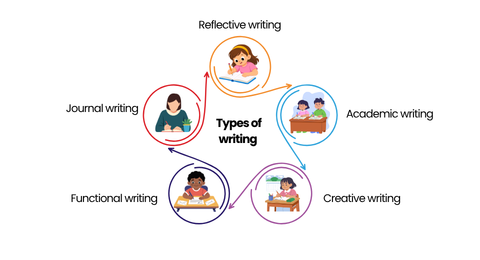
Types of writing that strengthen student development
-
Reflective writing
Students write about what they learned, how they felt and what challenged them. This teaches metacognition, a skill that allows students to understand how they think and learn.
-
Academic writing
Essays, answers, reports and summaries help them present information logically. These skills also support success in higher education and competitive examinations.
-
Creative writing
Writing poems, stories, plays, or imaginative pieces fosters originality and fluency. It builds enthusiasm for language learning and helps students express their emotions.
-
Functional writing
Emails, applications, notices and daily communication tasks prepare students for real-world interactions.
-
Journal writing
This helps emotional wellbeing, reduces anxiety and strengthens focus.
Long-term advantages of writing
Over time, students who write regularly demonstrate stronger organisation, better concentration and improved decision-making skills. They become better planners because writing helps them visualise ideas. Their listening and reading abilities improve because they begin to notice patterns in language. They articulate their thoughts more clearly, which allows them to participate in discussions and interviews. Writing even enhances leadership skills, because great leaders must communicate with clarity and conviction.
When writing becomes a natural part of everyday life, it shapes a child into a confident, thoughtful and emotionally mature individual who is ready for future academic and personal challenges.
Writing is far more than an academic requirement. It is a lifelong skill that shapes personality, thinking and creativity. Students who build strong writing habits early become better learners and more confident individuals. Whether it is reflective writing, academic expression or creative writing, every form helps students grow in powerful ways.
Schools that prioritise writing build children who observe more deeply, think more clearly and express more meaningfully. This is why educators at leading schools in Madurai focus on daily writing habits, creative expression and structured communication as part of holistic development.
Writing shapes minds, strengthens emotions and opens new possibilities. Encouraging a child to write is one of the greatest gifts we can offer to their future.