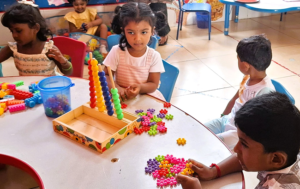

Motor skills are the coordinated actions of muscles and the brain working together. Gross motor skills involve larger movements such as jumping, running, throwing, and climbing. Fine motor skills activities involve smaller muscles used for writing, buttoning, tying laces, or picking up objects.
Both are essential, but gross motor skills provide the physical foundation that helps children sit upright in class, focus better, participate in sports, and even perform delicate fine motor tasks with greater control.
Understanding Motor Skills in Simple Terms
When you see a child sprint across a field, stretch to grab a ball, or balance confidently on a beam, you’re watching their foundation for physical and cognitive growth in action. These essential early movements fall under gross motor skills, which use large muscles of the arms, legs, and torso. Parents often hear related terms such as fine motor skills activities and gross motor skills activities, or even wonder what are motor skills, but it all comes down to one idea: motor skills help children control their bodies, explore their environment, and gradually gain independence.
This blog explores the top movement-based activities for different school levels, helping children grow confidently from the early years through adolescence.
Why Gross Motor Skills Matter?
The benefits of gross motor skills show up not only in physical strength but also in posture, coordination, emotional balance, and social confidence. Children who can climb, balance, run, or throw comfortably often find it easier to participate in group activities, interact with peers, and handle day-to-day challenges.
Stronger movement skills also help children concentrate better, manage energy levels, and feel motivated to explore new learning environments. These lifelong gross motor skills benefits support academic success, teamwork, sportsmanship, and personal confidence.
Gross Motor Skill Activities by Age and School Level
Children grow in stages, and their bodies are ready for different types of movement at each level. Below are development-aligned motor skills activities curated for primary, secondary, and senior school children.
Gross Motor Activities for Primary School Children
Primary students are full of energy, curiosity, and a desire to explore. At this stage, movement is directly tied to learning capacity and emotional expression. Activities should be playful, simple, and repeated often to strengthen coordination and stamina.
-
Jump and Hop Games
Marking spots on the floor, hopping between coloured tiles, or jumping over short ropes improves balance, body control, and leg strength. Children learn sequencing and spatial awareness through joyful repetition.
-
Running Games and Mini Races
Chase games, freeze tag, and relay-style short runs help children build stamina and speed. These activities also help children understand group play and social interaction.
-
Simple Balance Challenges
Walking on lines, stepping stones, soft beams, or practising one-foot balance improves stability and concentration. These activities directly support classroom posture and later handwriting readiness.
-
Crawl and Climb Activities
Soft climbing blocks, crawl tunnels, or obstacle paths strengthen core muscles. These movements help children gain confidence in navigating playgrounds and new environments.
-
Throwing and Catching Basics
Using soft balls, beanbags, or balloons, children practise hand-eye coordination. These activities build arm strength and rhythm, helping both physical and fine motor development.
-
Dance and Rhythm Play
Rhythm games, free dance, and follow-the-beat activities develop body awareness and self-expression. Movement combined with music improves timing and coordination.
These early activities prepare children to adapt comfortably to structured environments such as classroom seating, sports, and guided learning. Parents exploring early schooling options often consider environments that support movement-based learning, such as those offered by top ICSE schools in Madurai, which prioritise holistic development.
Gross Motor Activities for Secondary School Children
Secondary-level students are stronger, taller, and capable of more complex coordination. This is the stage where physical activity blends with discipline, teamwork, and body awareness.
-
Team Sports
Football, basketball, cricket, and throwball support agility, strategy, and teamwork. These sports strengthen muscles and foster communication skills among peers.
-
Track and Field Activities
Jumping events, arm swings, small sprints, and warm-up drills enhance stamina and speed. Students learn endurance, timing, and self-discipline through repeated practice.
-
Balance and Coordination Drills
Using balance boards, guided yoga movements, or slow-paced coordination games helps students focus, relieve stress, and tune into their posture.
-
Climbing and Strength-Based Play
Monkey bars, rope climbs, and wall bars build upper-body strength and resilience. These activities also support confidence as students overcome physical challenges.
-
Aerobic Movement Sessions
Skipping, rhythmic movement routines, and short aerobic circuits support heart health and energy regulation. These sessions help in balancing academic focus with physical release.
- Creative Movement Activities
Drama-based movement, expressive dance, or group choreography helps students connect creativity to motion. These activities support emotional expression and collaborative skills.
With growing academic pressure in secondary school, these movement activities help channel energy positively and enhance focus inside classrooms. Schools that emphasise holistic physical development stand out among quality schools in Madurai.
Gross Motor Activities for Senior School Students
Senior school students are transitioning into adulthood. Their activities should develop strength, endurance, flexibility, and mental resilience. This stage prepares them for lifelong fitness habits and responsible body awareness.
-
Strength Training Basics
Supervised bodyweight training, such as squats, planks, lunges, and push-ups, improves balance, muscle strength, and endurance. These activities build stamina for academic routines and sports.
-
Sports Skill Specialisation
Volleyball spiking, basketball shooting drills, cricket bowling technique, or athletic sprint practice help students refine specific skills. Mastery builds discipline and goal-directed learning.
-
Endurance Activities
Jogging, long walks, cycling, and swim sessions support heart health, lung capacity, and overall stamina. These activities also reduce anxiety and support emotional well-being.
-
Yoga and Flexibility Routines
Yoga sequences focusing on breath, alignment, and flow help students manage stress, maintain posture, and improve balance. Flexibility routines prevent muscle tightness during exam seasons.
-
Agility and Reaction Training
Using cones, speed ladders, or quick directional drills, students develop reflexes and speed. These exercises help with sports performance and body coordination.
-
Outdoor Challenges
Hiking, field exploration, or guided adventures build resilience, spatial awareness, and appreciation for nature. These experiences also create bonding moments within peer groups.
Functional Movement Circuits
A simple circuit combining stepping, squatting, light jumping, side-shuffling, and quick arm movements helps students improve coordination, stamina, and overall body control. These circuits can be adapted for any age group, making them excellent for warming up before sports or winding down after classes.
Partner Coordination Games
Students pair up to perform mirrored movements, passing challenges, or coordinated footwork sequences. These activities build teamwork, attention, balance, and rhythm. They also help strengthen peer relationships while reinforcing motor control and communication.
These activities equip senior students not only with stronger bodies but also with sharper focus and emotional balance, which they need as they prepare for higher education and career paths.
Children don’t just move to burn energy. They move to learn, grow, balance, and express. With every run, leap, climb, stretch, and dance, their bodies and brains form essential pathways that support academic learning, social behaviour, confidence, and emotional well-being.
Whether it’s early gross-motor skills activities, expressive dance routines, simple schoolyard games, or specialised sports, every movement helps children build a foundation that lasts a lifetime. Encouraging children through age-appropriate motor skills activities at home and school nurtures curiosity, resilience, and physical confidence.
When families choose environments that value movement-based learning, they support not only physical growth but also emotional and intellectual development. While exploring top ICSE schools in Madurai or reputable schools in Madurai, parents can look for institutions that make movement a natural part of learning.
Gross motor skills shape how children experience the world. Nurture them, and you nurture the child’s entire journey.