
Key Takeaways
- Curriculum planning shapes how children learn, not just what they study
- Structured curriculum improves understanding, retention, and long-term academic performance significantly
- Well-planned curricula boost student engagement and achievement by up to 30%
- Curriculum drives nearly 69% of overall student learning outcomes effectively
- Early curriculum planning supports brain development and builds essential foundational skills
Choosing a school today is not just about infrastructure or results. It’s about how your child actually learns. And that is where curriculum planning comes in.
So, what is curriculum planning? In simple terms, it’s the structured way schools design what students learn, how they learn it, and how progress is measured.
The definition of curriculum planning goes beyond textbooks. It includes –
- Learning goals
- Teaching methods
- Assessments
- Skill development
Think of it as the blueprint of the learning journey of your child.
Why is curriculum planning important in today’s education system?
Here is the truth, random teaching is not effective learning.
Structured curriculum design improves conceptual clarity and long-term retention among students. Schools that actually plan what and how they teach see real results. Research shows that well-structured curricula can boost student achievement and engagement by up to 30%. That is not just a small win; that is a game changer for how effectively children learn and grow.
Curriculum is not just one part of learning; it is the driver. In fact, it accounts for nearly 69% of the difference in student learning outcomes. That is a huge chunk; proving just how powerful the right curriculum can be.
Why it matters –
- Ensures age-appropriate learning
- Builds strong foundational skills
- Aligns with national and global standards
- Reduces academic pressure
How does the curriculum planning process actually work?
Let’s break down the curriculum planning process in a way that makes sense –
| Step | What it means | Why it matters |
| Goal setting | Define learning outcomes | Gives direction and vision |
| Content design | Select subjects and topics | Ensures relevance |
| Teaching strategy | Decide how to teach | Improves engagement and participation |
| Assessment planning | Measure progress | Tracks growth and improvements |
| Feedback loop | Continuous improvement | Keeps learning dynamic |
The best schools don’t just follow a curriculum; they design it thoughtfully.
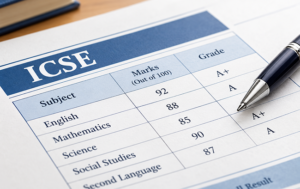
What makes ICSE and IGCSE curriculum planning different?
If you are exploring ICSE schools in Madurai or considering international boards, understanding the difference is key.
ICSE vs IGCSE Curriculum Approach
| Feature | ICSE | IGCSE |
| Focus | Conceptual and language depth | Global application |
| Learning style | Detailed and structured | Flexible and inquiry-based |
| Assessment | Internal and external | Coursework and exams |
| Skill focus | Strong writing and theory | Analytical and practical skills |
What this means for your child:
- ICSE builds strong academic foundations
- IGCSE prepares for global exposure
The right choice depends on your child’s learning style, not trends.
How does curriculum planning impact early education?
Yes, this matters even during the nursery school Admission stage. Research shows that 90% of brain development mostly happens before age 5. That is why strong curriculum planning in the early years focuses on:
- Play-based learning
- Language development
- Social interaction
- Curiosity-driven exploration
At Vikaasa, the early curriculum is designed to feel natural and not forced because kids learn best when they enjoy the process.
Which factors should parents consider while evaluating curriculum planning?
Choosing a school can feel overwhelming. Here is a quick checklist to simplify things –
Look for:
- Balance between academics and skills
- Focus on conceptual clarity
- Integration of real world learning
- Continuous assessment (not just exams)
- Teacher adaptability
Avoid
- Rote-heavy teaching
- Overloaded syllabus without purpose
- Lack of flexibility
Remember: a good curriculum prepares for life, not just exams.
How does Vikaasa make curriculum planning more meaningful?
At Vikaasa, the focus is on –
- Learning is student-centric, not syllabus-centric
- Teachers act as facilitators and mentors; not just as instructors
- Equal focus on academics, creativity and life skills
- Continuous feedback ensures improvement
With Vikaasa, it is not about finishing the syllabus, but it is about building understanding.
When should parents start thinking about curriculum planning?
Ideal timeline –
- Pre-school stage: Focus on building the foundational skills
- Primary years: Build concepts, engagement and curiosity
- Middle school: Strengthen analytical thinking
- Secondary level: Prepare for future pathways
Final Thoughts
Understanding what is curriculum planning is not just an academic concept; it’s a parenting advantage. At the end of the day:
- A well-planned curriculum reduces stress
- Builds confidence
- Shapes future-ready learners
At Vikaasa, curriculum planning is designed to make learning meaningful, structured, engaging, and enjoyable for every child. With a balanced focus on academics, creativity, critical thinking, and life skills, Vikaasa helps students grow into confident learners prepared for both exams and real life.
If you are exploring the right learning environment for your child, connect with Vikaasa today and discover how thoughtful education can create stronger foundations for lifelong success.
Frequently Asked Questions
What is curriculum planning in simple terms?
Curriculum planning is the structured process of deciding what students learn, how they learn and how their progress is assessed. It ensures that education is organised, relevant and aligned with learning goals at every stage.
Why is curriculum planning important for children?
It helps in building strong foundations, improving core understanding and ensuring holistic development. A thoughtfully planned curriculum supports academic success and essential life skills to make learning more effective and less stressful for children.
How is the ICSE curriculum planning different from the IGCSE?
ICSE focuses on detailed, concept-based learning with strong language skills, while IGCSE offers a flexible, global approach with emphasis on analytical and practical learning. Both have unique benefits depending on the child’s needs.
When should parents start focusing on curriculum planning?
Parents should start as early as pre-school. Early curriculum planning shapes foundational skills, confidence and learning habits. This helps the future academic transitions to be smoother and more effective.