

Why do some students score well in ICSE while others with equal effort fall behind? The answer lies not only in how much they study, but how smartly they prepare. The syllabus is vast. The paper pattern is unique. And most students start too late for the ICSE board exams.
What makes a difference is clear planning, regular practice, and a few easy changes in approach. Let’s break it down.
Top 7 Scoring Tips for ICSE Board Exams
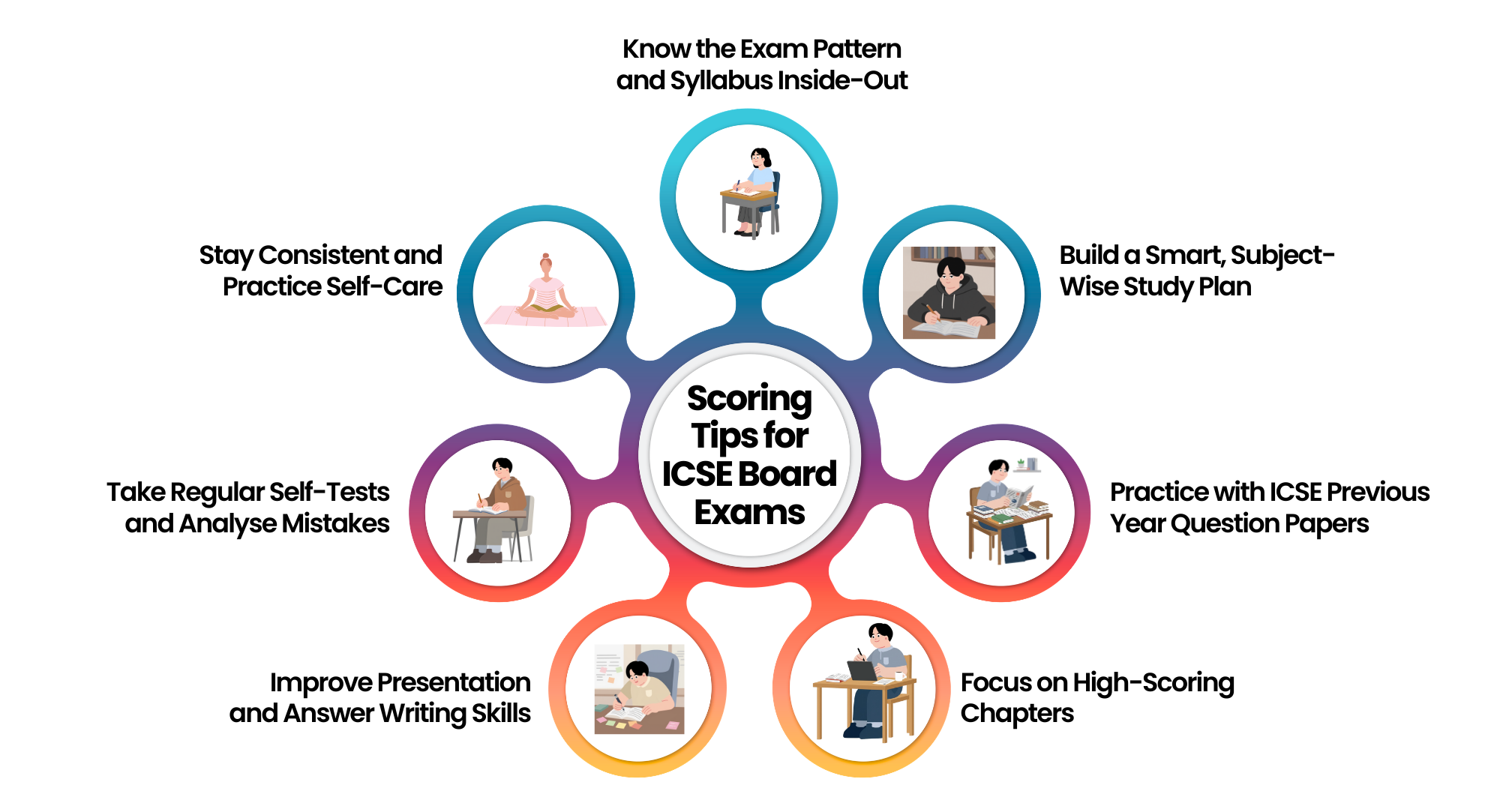
Doing well in the ICSE Board Exams is not about long hours. It is about how you manage those hours. With the right method, students can score high even on difficult papers. Many students from ICSE schools use a smart, step-by-step plan to prepare better. Now, let’s look at the top scoring tips that really work.
1. Know the Exam Pattern and Syllabus Inside-Out
Don’t skip this. Every student must begin with a clear understanding of the syllabus. The ICSE council updates topics regularly. Get the latest syllabus. Go through it line by line.
Then, check the weightage of each section. Once you know which parts carry more marks, you can plan better. The exam pattern helps you guess what to expect, so you don’t waste time on things that never come.
2. Build a Smart, Subject-Wise Study Plan
Every subject has a different demand. Maths needs more time for solving. History needs good memory. English requires clear writing. Make a plan that divides each day wisely. Stick to short, regular sessions. Avoid marathon hours. Take breaks. Keep a planner and tick off chapters as you go. This keeps your confidence steady.
3. Practice with ICSE Previous Year Question Papers
Old question papers are gold. They show you how questions are framed. They also show what types of answers score more. Solve at least 10 past papers for each subject.
Then, time yourself. Write under exam conditions. Don’t look at notes. Studies like those by PMC show that frequent low-stakes quizzing lowers anxiety and builds confidence. It improves memory. For ICSE Exams, this practice boosts writing speed and accuracy.
4. Focus on High-Scoring Chapters
Some chapters carry more marks. Some are easier to score. Focus there first. Make a list. Then revise those 2 to 3 times more than the rest.
Scoring in these chapters can lift your average even if you make small errors in the tougher ones. This tip alone has helped many students from best schools in madurai push their marks up.
5. Improve Presentation and Answer Writing Skills
Many students know the answer but lose marks due to poor writing. Write in points. Underline keywords. Keep paragraphs short. Leave space between answers. Try to write neatly. A clear layout makes it easier for the teacher to read. That means fewer chances of missing marks. Practice writing full answers every week.
6. Take Regular Self-Tests and Analyse Mistakes
Testing yourself weekly works better than reading the same notes ten times. Use mock tests. After each one, go over your mistakes.
Don’t just check what’s wrong, ask why. Note it down. Try that question again a few days later. Repeating this will slowly reduce your errors. One small test can teach more than one hour of theory.
7. Stay Consistent and Practice Self-Care
One day of 10 hours won’t help as much as ten days of one hour. Be consistent. Sleep well. Don’t skip meals. Drink water. Avoid too much screen time.
Talk to parents if you feel pressure. Simple walks help. A healthy mind remembers better. Even top students in ICSE Board Exams follow this balance. Without it, smart study won’t work.
Mistakes to Avoid Before the Exams
Even smart students lose marks because of silly errors. Many of these happen in the last few days. That’s when nerves are high. So, knowing what not to do is as important as knowing what to study.
| Mistake | Why It Hurts | What To Do Instead |
| Skipping Revision | Memory fades fast | Revise small portions daily |
| Ignoring Sleep | Reduces focus | Sleep 7–8 hours before exams |
| Too Much Last-Minute Study | Causes confusion | Focus on summaries and notes |
| No Writing Practice | Slows down in the exam | Write full answers every week |
| No Breaks | Leads to burnout | Take short walks and stretch |
Sometimes, the pressure to do everything perfectly can backfire. Students rush through chapters or panic if they miss a topic. But it is better to revise fewer topics calmly than stress over everything. Mental stress slows thinking and affects writing speed. Staying calm is often more helpful than one extra revision.
Many students also forget to eat right and stay hydrated. This leads to headaches, poor focus, and tiredness during the paper. Avoid junk food during exam time. Keep healthy snacks and water nearby while studying. A steady body supports a steady mind. It may sound small, but it changes how your brain works during long exams.
Final Thoughts
Every student can score better in the ICSE Board Exams with the right method. These tips for ICSE Board Exams are not shortcuts. They are habits. Start early. Stick to the plan. Stay healthy.
To help your child grow with the right mindset and school support, visit vikaasa.org. We form confidence from the roots.