Why do some ICSE students perform better even when they study the same number of hours? The difference lies not in the time, but in the method. Across India, parents and students are beginning to see how better study techniques bring lasting results.
Many schools encourage children to experiment with different learning techniques for students, but what works for ICSE demands special attention. Because the curriculum is vast and detail-heavy, the way you study often matters more than how long you sit. Let’s break it down.
Why ICSE Students Need Smart Study Techniques
The ICSE board is demanding. Children cannot depend only on memory. They must explain, apply, and present their answers clearly. Parents often feel frustrated when long study hours do not reflect in marks. The gap usually comes from weak habits, a lack of revision, or no proper system.
At Vikaasa, the difference shows. For the ISC/ICSE session in Madurai in 2024, 146 students passed the ICSE exam. Success like this is not a chance. It reflects careful methods, teacher guidance, and steady planning. Families who look for study tips soon realise that better routines bring steadier results.
Top Study Techniques for ICSE Students
Parents and children keep asking what are the best study techniques. The truth is there is no single trick. Instead, several small habits build strong results. Schools like Vikaasa show students how to balance writing practice, reading, and active learning strategies. Let’s see them one by one.
1. Create a Personalised Study Timetable
Timetables sound boring, but without them, time slips away. Students need rhythm. Morning hours may feel fresher for science. Evening might suit maths. The trick is to fit subjects into the natural energy flow of the child.
| Time Slot | Subject | Task Type |
| 6:30 – 7:30 AM | Science | Read and revise concepts |
| 4:00 – 5:00 PM | Mathematics | Problem-solving |
| 6:00 – 6:45 PM | English Literature | Learn poems and plays |
| 7:00 – 7:45 PM | History | Short notes and dates |
| 8:00 – 8:30 PM | Language | Writing practice |
This is only an example. Parents should adjust to the child’s pace.
2. Focus on Conceptual Understanding
ICSE rewards clarity. Children who repeat lines from guides often lose marks. Examiners prefer answers in the student’s own words. Encourage children to ask “why” when learning. When they solve a maths problem, check if they can explain the step, not just show the answer.
3. Active Revision Techniques
Revision is not passive reading. Real revision demands action. Self-tests. Writing answers without looking. Flashcards for quick recall. Mind maps that link events in history. Past papers were practised with a timer.
These study techniques for students make the brain work harder. That’s why the memory sticks. Children who test themselves regularly walk into exams calmer, because they have practised the pressure.
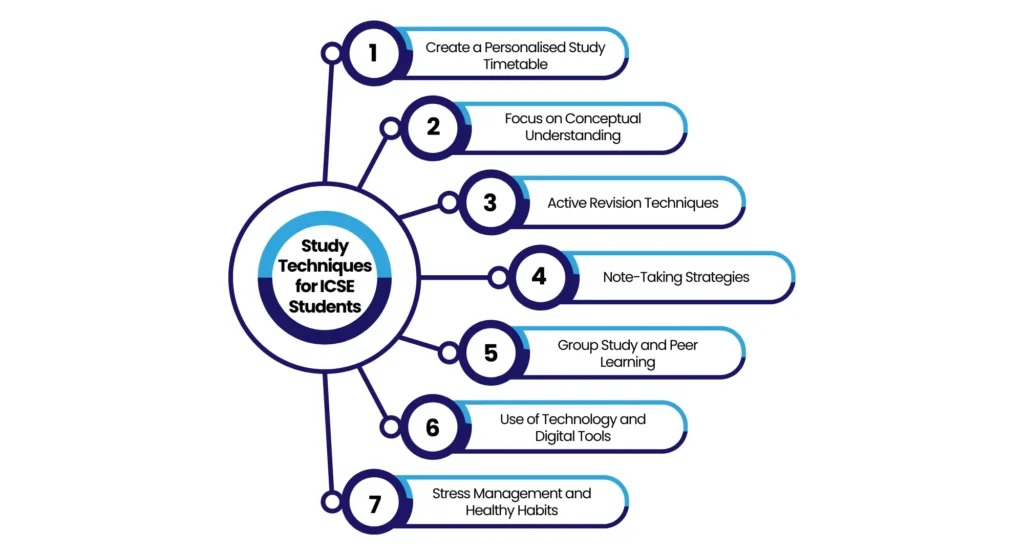
4. Note-Taking Strategies
Good notes save time later. Without them, revision before exams becomes chaos. Students must learn to write short and sharp notes.
Key points for better notes:
- Use short sentences, not long blocks
- Break answers into bullet points
- Mark key terms or dates with colour
- Keep one page for formulas only
- Add examples after every lesson
- Revise notes every weekend
Parents can check notebooks weekly to see if notes are neat and useful.
5. Group Study and Peer Learning
Children often enjoy studying with friends. But the risk is distraction. The safe way is to keep groups small. Three to four students are enough. One explains maths, another reviews history. This sharing builds confidence. It also teaches listening. Parents can offer their living room for such sessions. A plate of snacks on the side keeps the mood light.
6. Use of Technology and Digital Tools
Many children prefer phones and tablets to books. Instead of fighting it, guide them. Digital flashcards, online quizzes, and video lectures save time. Practice tests online mimic exam speed. But screens must be limited.
Schools like Vikaasa, and other International syllabus schools in Madurai, combine digital and traditional methods. This blend keeps children ready for both national exams and global standards.
7. Stress Management and Healthy Habits
Every parent hopes their child studies with less stress and more focus. Students want the same thing: steady marks without burning out. At Vikaasa, we believe structured habits and tested learning techniques for students make that possible. Families searching for ICSE schools in Madurai can see how we guide children with practical routines.
Exam-Specific Study Tips for ICSE Students
Exams need more than knowledge. They demand presentation and practice. Students must learn how examiners read papers.
- Solve ten years of ICSE past papers under time limits
- Present answers in points with clear margins
- Underline keywords in every answer
- Revise high-weightage chapters twice as often
- Keep a 20-minute daily self-test routine
- Avoid late-night cramming the week before
- Balance theory and problem-based subjects daily
- Analyse mistakes after each test and rework weak parts
These habits keep exams from feeling like a storm. They make preparation steady and results predictable.
Final Thoughts
Parents want results. Children want less stress. Schools like Vikaasa bring both together. They form systems where children practise better learning techniques, focus on clarity, and manage their time without panic.
With our effective study techniques, we help students prepare calmly and perform better. Visit Vikaasa to know more.