
Every academic year, parents across Madurai face an important concern: how to make sure their child adjusts well to a new grade, a new board, or even a new school altogether. While schools often focus on syllabus completion, parents quietly worry about confidence, clarity, and continuity.
This is where a bridge course can make all the difference.
If you’re a parent who has wondered what is bridge course, here’s a simple way to think about it. It is a short-term learning programme designed to prepare students for the upcoming academic year. Whether your child is moving from primary to middle school, changing boards, or joining a new school after a break, a bridge course offers them a softer, smoother start.
Let’s explore how bridge courses make academic transitions less stressful and help children feel confident and ready to learn, especially in schools like ours in Madurai.
Why Academic Transitions Need Extra Support
Children go through several learning transitions as they grow. From kindergarten to primary school, from one syllabus to another, or from classroom-based to digital learning. These shifts bring change at every level. Without support, students can feel unsure or even fall behind.
A bridge course for students is thoughtfully designed to:
- Reinforce Basics: It revisits core topics in English, Maths, and Science. For example, a child moving into Class 6 may review key concepts from Class 5 to build confidence.
- Match Curricula: If a child is switching from a state board to ICSE, the style of teaching and level of content may be different. Bridge courses help adjust to that.
- Offer Emotional Comfort: Children may feel anxious about new classrooms, teachers, and expectations. The slower pace of a bridge course gives them time to settle in.
At ICSE schools in Madurai, these transitions are even more common. Students often come from CBSE, state board, or even international backgrounds. A structured bridge course reduces the pressure of this change.
How Bridge Courses Build Confidence in Children
Confidence is not just about knowing the answer in class. It’s about feeling ready to ask questions, try new subjects, and take on challenges without fear. Bridge courses play a big role in this.
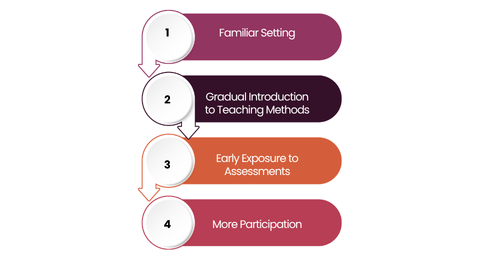
Here’s how:
- Familiar Setting: Classes are kept small and interactive. Students can speak freely and get personal attention.
- Gradual Introduction to Teaching Methods: Children learn how lessons are delivered in their new school. They get used to how teachers explain topics, assign homework, and assess work.
- Early Exposure to Assessments: Students practice different test formats like multiple-choice questions, short answers, and oral presentations. This reduces fear during exams.
- More Participation: Activities like group work, storytelling, and worksheets help shy students open up. They start the year feeling more prepared.
At Vikaasa School, we’ve seen students arrive in May looking nervous and unsure. But after a well-paced bridge course, many of them walk into the first day of class feeling ready. They know the routine. They’ve met their teachers. Most importantly, they believe they can do well.
The Role of Bridge Courses in Early Childhood
For parents exploring options like an international preschool, bridge programmes are equally helpful. Children who are used to free-play or informal daycare often find it difficult to settle into structured school environments.
At this young stage, a bridge course focuses on:
- Building attention span through simple tasks
- Learning classroom behaviour like taking turns and listening
- Introducing letter sounds, numbers, and colours through games
- Helping children get used to sitting for short periods
This gentle introduction makes a big difference. By the time formal school begins, the child is more comfortable, more social, and more curious to learn.
How We Approach Bridge Courses at Vikaasa
At Vikaasa School, we understand the importance of a bridge course in a child’s academic journey. Our team takes time to plan courses based on each student’s background. Whether a student is new to ICSE or joining us from abroad, we make sure they don’t feel left out.
Some features of our bridge programme include:
- Modular Learning: Courses are divided into small topics, so students don’t feel overloaded
- Tailored Content: Lessons are adapted based on a student’s previous school or syllabus
- Mentoring Support: Teachers work closely with students to guide both academic and emotional needs
- Skill Development: Sessions also include basic life skills like time management and self-discipline
This balance of academic and emotional support ensures that no student starts the year feeling behind.
So, What is Bridge Course in Schools Really About?
A bridge course in schools is not just about revision. It’s about making sure every child feels like they belong in the classroom from day one. It helps reduce the learning gap between students from different backgrounds and ensures no one feels left out or left behind.
It also reassures parents. You don’t have to worry if your child is coming from a different board, took a break during the year, or needs extra help in one subject. A well-planned bridge course gives them the head start they need.
Final Word
Whether your child is entering Grade 1 or Grade 9, joining a new board, or starting formal schooling for the first time, a bridge course gives them time, support, and clarity.
If you’re a parent in Madurai looking for a school that values smooth transitions, reach out to us at Vikaasa. We don’t rush students into the deep end. We walk with them—step by step—until they’re ready to run.