
Parents today want more than marks and medals. They want their children to understand concepts, feel confident, and enjoy learning. That is precisely why personalised learning in schools is becoming so important. It gives every child the space to grow at their own pace, explore their interests, and discover their strengths without feeling pressured to keep up with the crowd.
Understanding Personalised Learning
What is the real meaning of personalised learning?
The personalised learning meaning is simple. Instead of teaching every child the same way, schools customise learning based on each student’s pace, abilities, and learning style. Some students need visual aids, others need real-life examples, and others learn best through activities. Personalised learning recognises these differences and adjusts teaching accordingly.
A Parent-Friendly Way of Learning
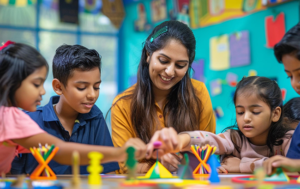
Think of a classroom where one child is practising extra reading support, another is doing an advanced Math challenge, and a third is exploring a hands-on science activity. All three are learning the same concept but in different ways that suit them. This flexibility not only makes learning easier but also builds confidence.
How Personalised Learning Works in Classrooms?
1. Learning Designed Around the Child
Schools that use personalised learning often begin the year by understanding each child’s strengths, previous learning levels, and preferred learning methods. Teachers then design daily tasks, projects, and revision plans that match each child’s progress. Schools like the well-known schools in Arapalayam, Madurai, follow these modern practices to make learning more inclusive and effective.
2. Activity-Based and Level-Based Learning
Instead of everyone solving the same worksheet, students may work on level-based tasks that match their current needs. Some may revise, some may apply concepts, and others may move ahead. This ensures students feel challenged but never overwhelmed.
3. Small Examples That Matter
A child who struggles with fractions may first work with physical objects, such as paper slices or blocks.
A child who loves stories may learn grammar rules through story-based exercises.
A fast-paced learner may be given higher-order thinking challenges to stay engaged.
These simple adjustments create long-lasting understanding and confidence.
Curriculum, Structure and Personalised Learning
1. How does the curriculum support personalised learning?
Schools that follow flexible, globally aligned structures, including institutions with the CIE curriculum for schools, naturally integrate personalised learning because their academic frameworks allow customisation in lesson planning, assessments, and teaching methods.
2. Stronger Foundations in Primary Classes
Personalised learning is beneficial in Primary classes. Teachers focus on pace-based learning, phonics support, visual-based Math, sensory activities, and strategies for emotional development. These methods reduce learning gaps and give children a strong start.
Why Personalised Learning Works
1. Academic Benefits
When concepts are introduced in a child-friendly way, students develop:
- Better retention
- Clearer concept understanding
- Higher classroom engagement
- More independent thinking
Since children move at a pace that suits them, learning becomes meaningful instead of mechanical.
2. Emotional and Social Growth
A personalised environment feels calm and safe. Children who receive support without judgment feel confident asking questions or trying new ideas. This emotional comfort leads to stronger participation, better communication, and improved self-esteem.
3. Does personalised learning boost creativity?
Yes. Children are encouraged to explore ideas, ask questions, and look for new solutions. When creativity becomes part of daily learning, students naturally grow into curious thinkers and problem solvers.
Personalised Learning and Modern Indian Classrooms
Are Indian schools adapting well?
More Madurai schools and other educational hubs across India are adopting personalised teaching styles. With teacher training, flexible lesson planning, and supportive learning tools, personalised learning is becoming more accessible even in larger classrooms.
Technology as a Support
Although personalised learning is not dependent on technology, smart tools help teachers understand student progress and adjust teaching accordingly. Digital worksheets, reading level apps, learning dashboards, and interactive content make this process smoother.
Personalised learning respects each child’s individuality. It understands that children grow differently. Some grasp quickly, some take more time. Some speak confidently, others observe quietly. Whether a child is shy, curious, energetic, or deeply thoughtful, personalised learning gives them the space to progress without comparison.
It prepares them for a future where confidence, adaptability, and independent thinking matter as much as marks.
It is a thoughtful, child-centred method that blends academic clarity with emotional confidence. As more parents seek balanced, nurturing education systems, personalised learning stands out as an approach that truly understands children as individuals with unique potential.