
Children in India step onto busy roads every single day, on the way to school, tuition, or play. Roads are shared by cars, bikes, buses, and people, so risk is always present. Kids are still learning how to judge speed and distance, which makes them more open to mistakes. That is why road safety rules must be taught early and repeated often.
With guidance from parents, and steady practice in schools, children can follow traffic safety habits naturally. Safety is not an extra lesson, it should become part of daily life. Let’s break it into simple steps.
10 Important Road Safety Guidelines for Kids in India
Children pick up what they see daily, not long lessons. Stop at the kerb, check both sides, watch the road safety signs, then move. These simple rules work better than lectures. Ten easy steps, taught at home and in schools, keep kids safer on India’s crowded roads.
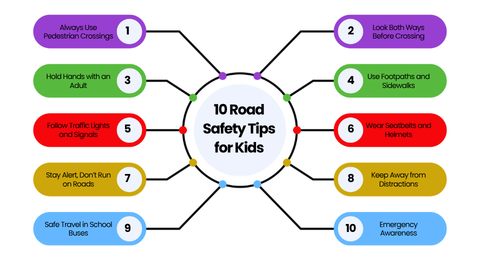
Rule 1: Always Use Pedestrian Crossings
Children should always cross roads at zebra lines. These are called traffic signs pedestrian crossing and are painted for safety. Vehicles are expected to slow down here. Teachers in pre Primary education often use games to teach this rule. For smaller children, parents should demonstrate by crossing only at marked lines. Repetition makes it a habit.
Rule 2: Look Both Ways Before Crossing
When a child comes near the road, the first thing to do is stop. Then look to the left, look to the right, and again to the left. Many drivers in India don’t always wait even when they should, so this extra check can save lives.
Children must get this habit early. Teachers can take small groups of kids on real practice walks near places like schools in Arapalayam Madurai, where they can see how traffic moves and learn by doing.
Rule 3: Hold Hands with an Adult
Young children cannot judge fast traffic. They also get distracted easily. Holding the hand of an adult while crossing is essential. Parents, older siblings, or teachers must guide them safely. This also reduces panic on crowded roads. For very small kids, adults must stay on the side facing vehicles.
Rule 4: Use Footpaths and Sidewalks
Sidewalks are designed for pedestrians. Yet many in India are blocked or uneven. Children must be taught to stick to the extreme left if a footpath is missing. Walking on the road edge is unsafe, especially during rain. Even in busy localities near best schools in Madurai, parents should instruct children to wait inside school gates rather than on the roadside.
Rule 5: Follow Traffic Lights and Signals
Traffic signals are easy to understand if explained properly. Kids can learn through charts of road safety signs and classroom posters.
Here’s a simple table to help children remember the signals:
| Signal Colour | Meaning | Action for Children |
| Red | Stop | Wait at the kerb |
| Yellow | Get ready | Prepare, but don’t cross |
| Green | Go | Cross quickly but carefully |
Children should also know types of traffic signs, like caution boards and school zone warnings. Teachers can introduce fun quizzes to help recall the different types of traffic signs.
Rule 6: Wear Seatbelts and Helmets
Whether in a car or on a bike, children must wear protection. A seatbelt reduces impact during sudden braking. A helmet guards against head injury. Parents must set an example by wearing theirs. Even for short trips, the habit matters. Not wearing safety gear can be deadly.
Rule 7: Stay Alert, Don’t Run on Roads
Kids often get excited and start running without thinking. But on a busy road, that one step can confuse a driver and cause trouble. Tell children to walk steadily, not rush. If they feel the need to run, it should be only inside the school grounds, never on the street. Schools can also make a line system so children learn to wait calmly when getting into the bus.
Rule 8: Keep Away from Distractions
A child holding a toy, talking to friends, or listening to loud music may forget to notice the car coming close. This is how accidents happen. Phones, snacks, and even balloons must wait until the road is crossed. Parents can keep reminding during daily walks. Teachers, too, can talk during assembly about the importance of road traffic signs and how they guide us when our minds are clear.
Rule 9: Safe Travel in School Buses
Buses are the main transport for students. Safety inside the bus is as important as safety on the road. Children should board only after the bus halts completely. They must never lean out of windows. Bags should be kept on laps, not blocking aisles. Schools should ensure attendants are present, especially for younger children.
Rule 10: Emergency Awareness
Kids must know what to do if they get lost or face an accident. Memorising parent phone numbers, police helpline (100), and ambulance (108) is vital. Schools can conduct mock drills. Parents can teach children how to ask for help from the traffic police. Even basic knowledge of road signs on the road can guide them to nearby safe spots.
Fun Ways to Teach Road Safety Rules to Children
Children don’t sit and learn safety by reading a page. They pick up more when the lesson feels like play. Parents often ask, How can we make road safety rules stick? The answer is simple: show, repeat, and turn it into small games.
Think of flashcards with road safety signs. A red light, a stop board, a zebra line, kids enjoy pointing and shouting the answer. Teachers can take them outside near a pedestrian crossing and act it out. One group moves like cars, the other waits to cross. It becomes a game, but the habit stays.
Try these with children:
- Tell short stories about a child walking safely.
- Let them draw road signs for preschoolers in colour.
- Take them for short practice walks and show them traffic safety.
- Ask simple quizzes on types of traffic signs.
When kids enjoy it, the rules stay with them for life.
Role of Parents and Schools in Road Safety Education
Parents are the first teachers of safety. A child copies behaviour, so if a parent jumps signals, the child thinks it is normal. Parents must follow rules of the road without excuses.
Schools also hold great responsibility. Classroom charts, posters of road signs for preschoolers, and interactive games make lessons memorable. Competitions on the 10 safety rules on the road for students can encourage interest.
Some schools even include safety lessons as part of higher secondary admission orientation. At all levels, repetition is the key. Teachers, bus drivers, and staff must show the same discipline expected from students.
Final Thoughts
Children in India step on the road every day, on the way to school, markets, or playgrounds. The danger is real, but habits can save them. Teaching road safety rules for students is not about a lecture, it is about showing them again and again till it becomes natural. Parents must walk with them, hold their hands, and follow the same rules. Schools should remind children through practice walks, stories, and small games around road safety signs.
No child should feel scared to cross a street. Safety is care, not fear. When home and school work together, children learn faster and stay safer.
See how schools add safety to learning at Vikaasa.