

Key Takeaways
- Internet safety helps students use technology responsibly and confidently every day
- Early cyber safety awareness reduces online risks and unsafe digital behaviour
- Students need guidance for privacy, scams, screen balance, and online communication
- Vikaasa promotes safe, supervised, and balanced technology-integrated learning experiences
- Responsible digital habits support stronger confidence, awareness, and independent online decisions
- Modern schools now prioritise cyber safety alongside academics and holistic development
What happens when your child clicks the wrong link online?
It usually starts innocently.
A student searches for homework help. Another clicks a random gaming ad. Someone shares a password with a friend. But, just within a few seconds, a simple online moment becomes dangerous and risky.
That’s the reality children are growing up in today.
The internet is no longer just entertainment. It’s where students learn, communicate, explore ideas, attend classes, and spend a huge part of their daily lives. And while technology opens incredible opportunities, it also brings real concerns around privacy, cyberbullying, scams, and unsafe content.
That’s exactly why internet safety for students is no longer optional. It’s essential.
At Vikaasa, digital learning is encouraged thoughtfully and responsibly. The focus is not just on making students tech-savvy, but also on teaching them how to stay safe, aware, and confident online.
For parents exploring schools in K Pudur, Madurai or searching for the ‘best schools Madurai’, understanding how schools approach online safety has become more important than ever.
How to teach internet safety effectively to students?
The truth is, simply saying be careful online is not enough anymore. Students need practical guidance for cyber safety that feels relatable and easy to follow.
At Vikaasa, the approach towards how to teach internet safety focuses on awareness, communication, and responsible digital habits instead of fear-based learning. The focus is on:
- Building social awareness early with open conversations
- Teaching the responsible use of technology
- Helping students to identify and understand online risks independently
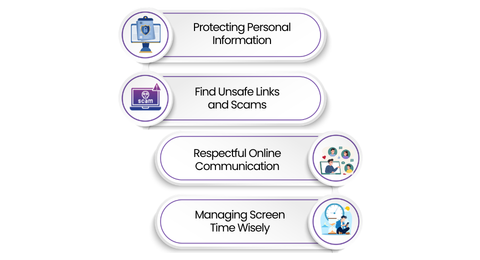
Vikaasa integrates digital responsibility into everyday learning experiences. Here are some essential internet safety tips students are encouraged to follow –
-
Protecting Personal Information
Students are taught never to share –
- Passwords
- Home addresses
- School details
- Personal photographs publicly
This helps build awareness around digital privacy from an early age.
-
Find Unsafe Links and Scams
Children learn to understand –
- How the fake websites appear and work
- Why suspicious links should be ignored
- How scams often appear
This practical awareness helps students to stay alert online.
-
Respectful Online Communication
Digital behaviour matters. Students are usually encouraged to –
- Speak respectfully online
- Avoid cyberbullying
- Report harmful behaviour as soon as possible
This helps students to become responsible and socially aware digital citizens.
-
Managing Screen Time Wisely
At Vikaasa, technology is used meaningfully and not excessively.
Students learn –
- Balanced screen habits
- Importance of offline activities
- Healthy digital routines
Smart technology use is just as important as digital learning itself.
How does Vikaasa create a safe digital learning environment?
What makes Vikaasa stand out is its balanced approach towards internet safety using technology and learning. At Vikaasa, technology is seen as a tool for growth, not a distraction. Students are encouraged to:
- Think critically and logically online
- Use digital platforms responsibly
- Balance online and offline learning
- Stay curious while staying safe
The school also focuses on –
- Safe digital exposure
- Guided technology integration
- Student-centred learning environments
- Teacher supervision during digital activities
What supports online safety at Vikaasa?
| Vikaasa Approach | Student Benefit |
| Guided digital learning | Safe internet usage |
| Interactive classrooms | Better engagement |
| Teacher mentorship | Responsible online behaviour |
| Concept-based education | Smarter decision-making |
For parents looking into ICSE syllabus schools in Madurai, this balanced learning environment matters a lot for students to develop digital confidence and responsibility.
When should children start learning online safety habits?
Ideal stages –
| Age Group | Focus Area |
| Early years | Safe screen habits |
| Primary school | Basic online awareness |
| Middle school | Privacy and cyber risks |
| Secondary school | Responsible digital identity |
Building these habits early makes students more confident and safer online later.
Final Thoughts
The internet is now a permanent part of childhood. This means teaching online safety is no longer just a parental responsibility or a one-time conversation. It has become an essential life skill.
If you are looking for secure ICSE schools in Madurai, a school that values both education and cyber safety makes all the difference. Students, at Vikaasa, are not only taught academics but also guided to become responsible digital citizens. Through awareness-driven learning, supervised technology use, and value-based education, Vikaasa helps students build safe and healthy digital habits from an early age.
Connect with Vikaasa today to discover how holistic learning and digital responsibility go hand in hand for your child’s future.
Frequently Asked Questions (FAQs)
What is internet safety for students?
Internet safety for students refers to using the internet responsibly while protecting privacy, avoiding online risks and practising safe digital behaviour.
Why is online safety important for children?
Online safety helps children avoid cyberbullying, scams, unsafe websites and privacy risks while building responsible internet habits.
How to teach internet safety to students effectively?
Internet safety can be taught through awareness, open communication, supervised digital learning and practical online safety habits.
What are some important internet safety tips for students?
Students should avoid sharing personal information, use strong passwords, identify suspicious links and report unsafe online behaviour immediately.
Why are schools focusing more on cyber safety today?
As digital learning increases, schools are helping students develop responsible technology habits and safer online decision-making skills.