Why does one student grasp lessons quickly while another struggles with the same page for hours? The answer often lies in hidden barriers. These barriers are what we call Learning Challenges. They affect confidence, memory, and focus in many ways.
Families in India often ask teachers how to Overcome Learning Challenges without breaking a child’s spirit. The right guidance can make progress smoother. Let’s break it down.
Different Types of Learning Challenges
Learning difficulties are not the same for every child. Some face trouble with reading words, while others freeze with numbers. A few cannot focus for more than a few minutes. Many carry worry that makes studying harder.
- Dyslexia, where letters move or mix on the page.
- Dyscalculia occurs when numbers refuse to settle in the mind.
- Attention issues, where focus jumps like a restless bird.
- Language barriers, where English or regional words clash.
Each is unique, yet each can be supported with the right guidance.
Identifying Signs of Learning Difficulties Early
A teacher who watches closely can catch signals long before they grow heavy. Parents, too, must listen.
- Slow reading compared to peers.
- Struggles to write clear sentences.
- Avoids homework or hides test papers.
- Complaints of stomach aches on exam days.
Spotting early makes Learning Challenges less scary and gives space for support.
Creating a Supportive Learning Environment
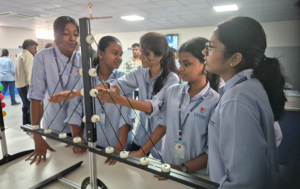
Classrooms should feel safe. Not noisy or full of pressure. Warm lighting, space to ask questions, and patience make all the difference. In many good schools in Madurai, teachers arrange smaller groups so children do not feel lost in a crowd. A caring space can calm nerves and lift confidence.
1. Encouraging a Growth Mindset in Students
When a student hears, “You cannot do maths,” the words stay. But when told, “You are still learning,” hope grows. Parents in top ICSE schools in Madurai often use this language at home too. Mistakes should be treated as steps, not failures. The sound of encouragement matters more than the final mark on the sheet.
2. Using Personalized Teaching Strategies
Every child learns at a different rhythm. Some need stories, some need charts, some need repetition. Instead of one fixed way, teachers can mix styles.
| Challenge | Strategy | Example |
| Reading difficulty | Multi-sensory approach | Use sand tracing for letters |
| Math blocks | Visual aids | Show numbers with beads |
| Attention issues | Short tasks | Break lessons into 10-minute goals |
| Language barrier | Peer learning | Pair a student with a bilingual classmate |
Personal touch builds stronger trust.
3. Incorporating Technology and Learning Tools
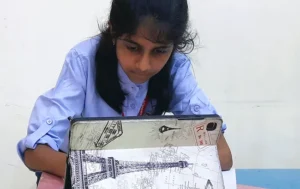
Simple tools like audiobooks, speech-to-text apps, or interactive quizzes can change the pace. In many schools in Arapalayam Madurai, teachers now use tablets with colourful visuals. For a child who cannot grasp from plain text, sound and image together make concepts stick. Technology, when balanced, does not distract but supports.
4. Building Strong Communication Between Teachers and Parents
Sometimes the real struggle hides between home and school. Parents think teachers will fix it, and teachers think parents will notice. Without talk, the gap widens. Weekly notes, short calls, or even WhatsApp groups bridge this gap. Parents of children facing learning challenges for students must feel free to ask small questions daily.
5. Providing Emotional and Social Support
No student should feel alone in a crowded corridor. Some already fear teasing. Teachers can assign buddies, organise group games, or run quiet peer circles. These soften isolation. Emotional care is not separate from academic care; it feeds it.
- Create buddy systems.
- Encourage peer support groups.
- Offer private counselling rooms.
When children know they are not odd, but simply different, they carry lighter hearts into class.
6. Helping Students Develop Study and Organisation Skills
Organisation is not natural for all. A student may scatter notes, forget dates, or mix assignments. Simple planners, coloured folders, and phone alarms help. In the higher secondary admission stage, when work grows heavier, these habits matter more. Parents can sit once a week and sort together with the child, showing how to line up tasks.
7. Celebrating Small Wins and Progress
Too often, only the big exam result gets applause. For a child who finished one clean paragraph, that is already a win. Marking those wins fuels the next attempt. Teachers can use stickers, praise words, or small certificates. Families can cook a favourite meal when progress shows. These tiny cheers create long-term resilience in How to Overcome Learning Challenges.
Final Thoughts
Learning is never straight. Some days, a child will surprise you, and other days, nothing seems to work. That is normal. Parents often ask how to Overcome Learning Challenges, but there is no magic rule.
Sometimes it is a quiet word from a teacher, sometimes a chart on the wall, sometimes just listening without scolding. Progress may look slow from the outside, yet inside, the child is building courage.
Support and patience are the only steady tools. If you want help shaping that path, Vikaasa can guide families and students with practical steps that really fit.