
Building a study routine may sound simple, but it’s one of the most powerful tools in a student’s life. A study timetable can turn confusion into clarity with the proper structure, balance, and discipline. Whether you’re a student at one of the top Cambridge curriculum schools or preparing for board exams at one of the reputed schools in Villapuram, Madurai, this guide on how to make a study timetable will give you everything you need to stay on track.
Why a Study Timetable Matters?
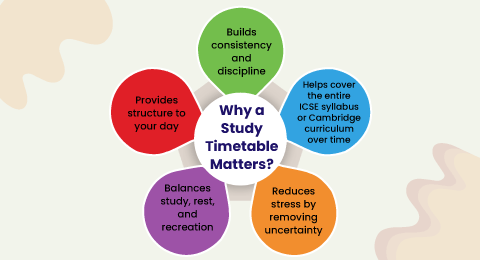
A study plan isn’t just a set of rules—it’s your personalized strategy for academic success. Here’s why creating one is essential:
- Provides structure to your day
- Builds consistency and discipline
- Helps cover the entire ICSE syllabus or Cambridge curriculum over time
- Reduces stress by removing uncertainty
- Balances study, rest, and recreation
Whether figuring out how to make a study plan for the first time or trying to improve your current one, having a system is better than depending on last-minute motivation.
How to Create a Study Timetable Step-by-Step
1. Understand Your Time Availability
The first step in how to create a study timetable is to map out your current day. Note your time at school, homework, commuting, extracurricular activities, and rest. Once you know your free hours, you can start placing focused study slots.
Pro tip: Leave at least 7–8 hours for sleep. Rested minds retain better.
2. Set Clear Academic Goals
Before you jump into making a timetable, decide:
- What are your upcoming exams or deadlines?
- Are you preparing for boards, internal assessments, or entrance exams?
- Which subjects require extra attention?
This clarity will help you create a study plan that prioritizes the most important goals first.
3. Divide Subjects Based on Priority
All subjects aren’t equal—some demand more time. Make a list and classify them by:
- Difficulty level (High/Medium/Low)
- Your confidence level
- Upcoming test dates
Allocate longer or more frequent slots to more challenging subjects.
For example:
- Monday evening: 1 hour of Physics (High priority)
- Tuesday evening: 45 minutes of History (Moderate priority)
4. Break It Down Into Manageable Blocks
Trying to study for hours without breaks isn’t sustainable. Use time blocks to make your plan more effective:
- Study in 45–60 minute blocks
- Take a 10-minute break between each session
- Mix tough and easy subjects to avoid burnout
This method is beneficial for students who are managing heavy subjects under the ICSE exam pattern or the Cambridge boards.
5. Include Time for Revision and Practice
Learning doesn’t end after one read-through. Build daily or weekly revision blocks into your timetable:
- Quick topic reviews
- Solving past papers
- Flashcards or quizzes
- Group study or discussions
Revision is your secret weapon if you’re trying to learn how to create a study timetable that lasts.
6. Add Flexibility to Stay Consistent
A rigid timetable can be tough to follow. So leave buffer slots for:
- Overflows (if one topic takes longer)
- Unforeseen events or low-energy days
- Weekly plan reviews
Consistency matters more than perfection. It’s okay to miss a session or swap topics—what matters is sticking to the habit.
7. Use Tools to Organize
Tech can be your friend. Here’s how to stay organized:
- Use apps like Google Calendar or MyStudyLife
- Maintain a physical planner if you prefer visual tracking
- Color-code subjects for clarity
- Add to-do lists with checkboxes
This keeps your plan visible and manageable at a glance.
Extra Tips to Stay on Track
Creating a timetable is one thing—sticking to it is another. These simple tips can help:
- Start with a light load and scale up
- Keep your study space neat and distraction-free
- Tell your family about your study hours for fewer interruptions
- Use sticky notes for motivation
- Be honest—if a method isn’t working, change it!
Timetable Planning for Different Boards
If you’re studying under the ICSE exam pattern, your timetable may need to focus on subjects like English Literature, History, or Mathematics, with longer blocks for writing practice and numerical work.
For those under the Cambridge curriculum, include time for coursework, project-based assessments, and critical thinking exercises.
Understanding the demands of your board will help you create a study plan that works specifically for you.
Knowing how to stay focused while studying is a life skill that sets the stage for academic success and time management in every area of life. It teaches you how to plan, how to prioritize, and how to stay accountable.
Whether you’re studying in Cambridge curriculum schools or one of the top schools in Villapuram, Madurai, the right plan will help you stay ahead of deadlines and truly understand what you’re learning, not just memorize it.
Begin today. Make a realistic plan, review it weekly, and build the study habit one step at a time. Your future self will thank you!