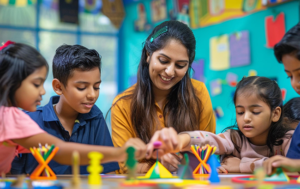

Cooperative learning is a teaching approach where students collaborate and work together in small groups to achieve shared learning goals, supporting one another; while developing both academic and social skills.
If you have ever wondered what is cooperative learning; imagine a classroom where students don’t just listen; they discuss, collaborate, explain ideas to one another and solve problems as a team. Learning becomes more interactive, more engaging, and often more meaningful.
At progressive schools like Vikaasa, cooperative learning is not just a teaching method; it is part of a broader philosophy that values teamwork, communication and active participation. These are skills students will use not only in school, but throughout life.
Cooperative Learning: Explained Simply
Cooperative learning involves structured group activities where each student is responsible for both their own learning and the learning of their peers.
This approach is different from simple group work. In cooperative learning, teachers carefully design tasks so that-
- Every student has a clear role
- Group success depends on individual contributions
- Students support and encourage one another
- Accountability is shared and individual
- Communication and collaboration are built into the task
This structure helps ensure that all students participate meaningfully; not just the most confident voices in the room.
Why Do Schools Use Cooperative Learning?
Schools use cooperative learning to improve understanding, build social skills, and increase student engagement. It is often observed that students learn better when they actively participate. Cooperative learning helps them with-
- Thorough understanding through active discussion
- Improving communication skills
- Encouraging peer support
- Building confidence
- Making learning more enjoyable
Students become active contributors; rather than just passively receiving information. This shift makes lessons more dynamic in a learning culture where students feel safe to share ideas and thoughts, ask questions and learn from one another.
Types of Cooperative Learning
The most common types of cooperative learning include structured group strategies designed to promote participation, accountability and teamwork.
Some widely used types include:
- Think-Pair-Share: Students think individually, discuss with a partner and then share with the class. This builds confidence and encourages all students to participate.
- Jigsaw Method: Each student learns and becomes an expert on one part of a topic, then teaches it to their group. This promotes responsibility and a deeper understanding.
- Group Investigation: Students work together to research a topic, analyse information and present their findings as a team.
- Peer Tutoring: Students support one another by explaining concepts and practising skills together.
- Team-Based Projects: Groups collaborate on longer-term tasks that require planning, cooperation and shared decision-making.
What are the Cooperative Learning Benefits for Students?
The key cooperative learning benefits include stronger academic understanding, improved social skills, and increased confidence.
Here is how students benefit-
- Better academic performance: Explaining ideas to others strengthens understanding.
- Improved communication skills: Students learn to listen, understand better, speak clearly and express ideas respectfully.
- Stronger teamwork abilities: Collaboration becomes a natural part of their learning and growing.
- Increased confidence: Supportive group settings help even the quieter students to participate.
- Greater motivation: Learning together feels more enjoyable and meaningful.
At Vikaasa, these benefits are closely aligned with the school’s goal of developing confident, capable and well-rounded learners.
How Cooperative Learning Encourages Real-World Skills?
Cooperative learning helps students develop essential life skills needed beyond the classroom. In today’s world, success often depends on the ability to-
- Work in teams
- Communicate effectively
- Respect different perspectives
- Solve problems collaboratively
- Take shared responsibility
Cooperative learning mirrors real-life situations, from workplace teamwork to community involvement. By practising these skills early, students are better prepared for future academic, professional and social environments.
How Vikaasa Uses Cooperative Learning Effectively?
Vikaasa integrates cooperative learning into its curriculum to support active, student-centred learning. What makes Vikaasa’s approach effective includes:
- Trained and experienced teachers
- Clear group structures and expectations
- Balanced individual and group accountability
- Continuous teacher guidance and feedback
- A positive and respectful classroom culture
This ensures that cooperative learning remains focused on learning outcomes; not just group activity.
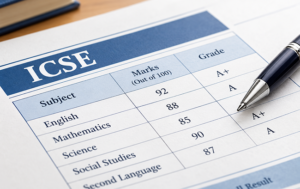
As a respected ICSE School in Madurai; Vikaasa blends strong academic standards with modern teaching strategies, helping students benefit from both academic rigour and collaborative learning experiences.
Why Parents Value Cooperative Learning at Vikaasa?
Parents value cooperative learning because it supports both academic success and personal development. Many parents notice that children who engage in cooperative learning often-
- Show improved communication at home
- Become more confident in sharing ideas
- Develop better problem-solving skills
- Learn to work respectfully with others
This balanced development is one of the reasons families consider Vikaasa among the best schools in Madurai that focuses not only on marks, but on preparing students for life.
Final Thoughts: Learning Together, Growing Together
Cooperative learning is a thoughtful and structured approach that helps students learn together, grow together and support one another along the way.
By combining strong academics with collaborative teaching methods, Vikaasa continues to provide an education that is engaging, supportive, and future-focused. It is committed to creating classrooms where students feel connected, confident and actively involved in their own learning journey.