

If your child sits at the study table for an hour but retains barely 10 minutes’ worth of material, you are not alone. This is one of the most common concerns that parents share with us at Vikaasa Schools, one of the best schools in Madurai. And it is completely valid. The ICSE curriculum is detailed and concept-driven. For students to truly absorb it, concentration is everything.
So, where do you begin?
Why Does Concentration Matter for ICSE Students?
The ICSE board is known for its depth of learning. Unlike rote-based approaches, it requires students to think, analyse, and apply. That kind of learning demands sustained focus. When a child cannot figure out how to improve concentration in their study sessions, they end up re-reading the same page multiple times without making progress, which leads to frustration and burnout.
Poor concentration also affects exam performance. ICSE papers require structured, detailed answers. A wandering mind during an exam can cost marks even when the child genuinely knows the content.
What Causes Poor Concentration in Students?
Before looking at solutions, it helps to understand the root causes. Here are the most common ones:
| Cause | How It Affects Your Child |
| Excessive screen time | Reduces attention span over time |
| Irregular sleep schedule | Impairs memory and alertness |
| Cluttered or noisy study space | Creates constant mental distractions |
| No study routine | The brain never shifts into “focus mode” |
| Stress or exam anxiety | Occupies mental bandwidth |
| Skipping meals or poor diet | Reduces brain energy and alertness |
How to Improve Your Concentration as an ICSE Student: 5 Practical Tips
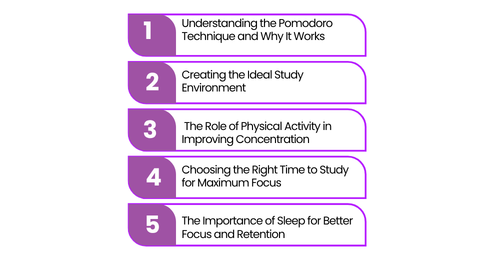
1. Understanding the Pomodoro Technique and Why It Works
Ask your child to study for 25 minutes, then take a 5-minute break. Repeat this cycle four times, followed by a longer break of 15–20 minutes. This is called the Pomodoro Technique, and it works because the brain focuses better when it knows rest is coming soon. It prevents that glazed-over feeling after long study sessions.
2. Creating the Ideal Study Environment
A quiet, well-lit, clutter-free space makes a genuine difference. Keep phones in another room during study time. Even the mere presence of a phone on the desk has been shown to reduce cognitive capacity. At Schools in KK Nagar, Madurai, like Vikaasa, we encourage parents to designate a fixed study corner at home.
3. The Role of Physical Activity in Improving Concentration
Exercise increases blood flow to the brain and triggers the release of chemicals that improve focus and mood. Encourage your child to spend at least 30 minutes on physical activity each day, whether it is cycling, a sport, or even a brisk walk. Schools that prioritise physical education are not doing so at the cost of academics; they are supporting it.
4. Choosing the Right Time to Study for Maximum Focus
Help your child identify their peak alert hours. Some children focus best in the morning, others in the late afternoon. Scheduling the harder ICSE subjects during these windows makes concentrating while studying significantly easier.
5. The Importance of Sleep for Better Focus and Retention
Children aged 10 to 14 need 9 to 10 hours of sleep. Sleep is when the brain consolidates everything learned during the day. A sleep-deprived child who studies for three hours will retain far less than a well-rested child who studies for one.
How Can Parents Support Concentration at Home?
As a parent, your role goes beyond buying the right study materials. Here is what genuinely helps:
- Talk to your child about their study day without judgment.
- Avoid interrupting study sessions with household conversations.
- Serve brain-friendly snacks like nuts, fruits, and whole grains during study breaks.
- Limit streaming and social media to after study hours.
- Practise short mindfulness exercises together, even 5 minutes of calm breathing before a study session can help your child settle their mind.
As one of the top ICSE schools in Madurai, Vikaasa Schools regularly holds parent-teacher conversations on this very topic, because improving concentration is a shared responsibility between home and school.
Frequently Asked Questions (FAQs)
1. How long should an ICSE student study in one sitting?
Research suggests that younger students lose focus around the 10-minute mark during passive activities. Using structured techniques like Pomodoro keeps sessions productive. Aim for 25-minute focused blocks with short breaks in between.
2. What foods help improve concentration in children?
Foods rich in omega-3 fatty acids (like walnuts and fish), antioxidants (like berries), and complex carbohydrates (like oats and whole-grain bread) support brain function and sustained focus.
3. Should I allow my child to listen to music while studying?
Soft instrumental music or white noise can work for some children by masking external distractions. However, music with lyrics tends to compete with reading and writing tasks. Let your child experiment and see what genuinely helps their focus rather than just entertaining them.
4. What if my child has genuinely poor concentration despite trying these tips?
Persistent difficulty with focus may sometimes point to conditions like ADHD or anxiety. If the problem is consistent across all settings and significantly impacts learning, a consultation with a paediatrician or educational psychologist is a worthwhile step.
5. How does Vikaasa Schools address concentration in the classroom?
At Vikaasa, our teachers use active learning methods, small-group activities, and regular check-ins to keep students engaged. We also partner with parents to ensure habits built at school are reinforced at home.