
Choosing the right preschool for your child can feel like a big decision and rightly so. This early educational experience lays the foundation for how your child learns, interacts and grows. Often, there is a dilemma between Montessori preschool vs traditional preschool: which one is right for my child?
In this guide, we will break down both approaches in a clear and friendly way. Let us walk down to understand – what they are, how they differ, their benefits and how to decide what’s best for your family.
Understanding Early Education: A Quick Intro
Before diving into the comparison, let us answer the essential questions parents often ask – What is a Montessori preschool and a traditional preschool?
What is a Montessori Preschool?
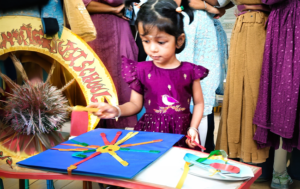
A Montessori preschool is based on a child-centred approach, which was introduced by Dr Maria Montessori in the early 20th century. This philosophy respects each child as a unique learner and emphasises independence, exploration and hands-on learning. Classes usually include mixed ages, specially designed materials and a prepared environment that allows children to learn at their own pace.
What is Traditional Education?
After knowing about Montessori education; let us talk about what is traditional education.
Traditional education in the preschool context usually refers to a teacher-led, structured approach where children in the same age group follow a set schedule of activities; often focusing on early literacy, numeracy and group learning. The day may include circle time, guided activities and more structured lessons in a predictable routine.
Montessori Preschool vs Traditional Preschool: Core Differences
Let us now look at several aspects where these two approaches differ most clearly.
-
Learning Approach
- Montessori: Children choose activities based on interest and developmental readiness. Learning is self-directed but guided; teachers act as observers and facilitators rather than instructors.
- Traditional: Teachers take the lead to deliver group lessons; while ensuring all children follow the same curriculum.
-
Classroom Environment
- Montessori: Calm and organised spaces with child-sized materials designed for discovery and purposeful learning. Multi-age groups encourage peer mentoring and cooperation.
- Traditional: Structured layout with desks or areas for different subjects. Children are usually grouped strictly by age.
-
Role of the Teacher
- In a Montessori setting, the teacher is more of a guide or a mentor, observing and supporting each child’s choices.
- In traditional classrooms, the teacher often directs the day, leading lessons and managing activities.
-
Assessment
- Montessori education uses observation-based assessment. It measures and analyses progress through interaction and engagement.
- On the other hand; traditional preschools may use more formal checkpoints like checklists, examinations, presentations or verbal evaluations.
-
Individual Pace vs Group Progress
- Montessori lets children work at their own pace and ease. A child can move on and upgrade when they are ready, rather than waiting for the whole class.
- Traditional models keep the entire class on the same schedule.
Side-by-Side Comparison Table
Here is a quick snapshot to help you compare Montessori preschool vs traditional preschool at a glance:
| Feature | Montessori Preschool | Traditional Preschool |
| Teaching Style | Children-led and mentor supported | Teacher-led and structured |
| Curriculum Flexibility | Individualised and flexible | Pre-set curriculum and group pacing |
| Classroom Grouping | Mixed ages | Same age groups |
| Assessment | Observation and skill-based progress | Checklists, examination, verbal |
| Learning Materials | Hands-on and self-learning at their own pace | Books, worksheets, presentations, learning activities |
| Independence Focus | High | Moderate |
| Goal | Holistic Development | Academic readiness and learning social skills |
Why Montessori Education is so Important?
Parents often wonder about the importance of Montessori education. Here are some good research points to notable benefits.
Research-Backed Benefits
Studies show that children in Montessori programs often outperform peers in key areas of development. For example-
- Montessori students tend to show higher academic proficiency in academic learning compared with traditional peers.
- In social cognition tests like the False Belief task, many Montessori students passed compared with traditional preschoolers.
- Other research suggests stronger executive function and self-regulation; essential skills for lifelong learning and adaptation.
Benefits of Montessori Education
Here are some of the benefits of Montessori education that make this approach so appealing to parents:
- Encourages independence– Children learn to make their own choices and become confident.
- Fosters curiosity– Self-directed exploration builds imagination and love for learning.
- Develops social skills– Mixed-age classrooms encourage cooperation and empathy.
- Supports holistic growth– Academic skills balanced with practical life lessons.
The Value of Traditional Preschool
While Montessori education has all its sparkling benefits; it is also worth acknowledging the strengths of the traditional model, too.
What traditional learning offers:
- Structured routine: Some children thrive on predictable schedules and clear expectations.
- Academic foundations: Early literacy, numeracy and group learning prepare children for formal schooling.
- Large peer groups: Traditional classrooms can offer enhanced social interaction and teamwork.
The structured nature often aligns better with later schooling environments, particularly where academic readiness is prioritised.
How to Decide What’s Best for Your Child?
Now comes the million-dollar question: which is right for your child? The answer depends on your child’s personality, learning style and your family values.
Consider Your Child’s Temperament
Ask yourself:
- Does your child enjoy making choices and exploring independently?
- Do they thrive with some freedom and self-pacing?
If yes, a Montessori preschool might suit them well.
On the other hand:
- Does your child benefit from routine and clear instruction?
- Do they enjoy group activities or thrive in structured settings?
A traditional preschool could be a great fit.
Practical Tips for Making the Choice
To get a better understanding of what is Montessori education and its benefits vs. traditional education benefits; here are some hands-on tips you must consider:
-
Visit Both Settings
Seeing classrooms and interacting with teachers makes a huge difference. Whether it is a Cambridge Montessori Preschool or a traditional setting, when touring, observe:
- How children engage with materials
- The role of teachers – do they act as guides or just instructors?
- How children interact with each other
- How is the learning environment
-
Think Long Term
Consider admission in preschool not just as a year-long programme, but as the beginning of your child’s learning journey. Early experiences influence confidence, curiosity and school mindset.
-
Talk to Educators
Ask educators how they:
- Support independence and problem-solving
- Track progress
- Prepare children for primary school
-
Reflect on Your Goals
Always consider what matters more to your family – independence and discovery or early academic readiness and routine? The school should reflect on your goals.
Every child has their own way of learning and exploring things; thus, there’s no one-size-fits-all answer.
Why is Vikaasa the Preschool that Parents Trust?
Vikaasa blends proven early-learning philosophies with a strong focus on individual growth, emotional wellbeing and school readiness. With trained educators that are more like mentors to students, thoughtfully designed learning spaces and a child-first approach; Vikaasa nurtures curiosity, confidence and independence.
If you want a school that builds confident thinkers; not just exam scorers; Vikaasa is one of the future-ready Madurai schools, offering meaningful education.
Conclusion: It is About Fit, Not Labels
Montessori preschool vs traditional preschool should not be about which is better universally; but, it is about which is better for your child.
Montessori education offers compelling benefits, especially in nurturing independence, lifelong learning habits and curiosity. Traditional education remains a strong choice for structure, early academic readiness and group dynamics. It is recommended that you focus on your child’s individual needs and it will always point you in the right direction.