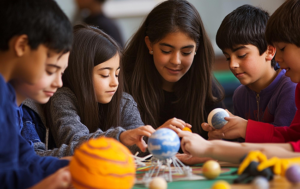

In simple terms, collaborative learning is an approach in which children learn by working together in pairs, small groups, or teams. Instead of simply listening to the teacher, students participate, contribute ideas, solve problems, and collectively build understanding.
Understanding What Collaborative Learning Really Means
If you have ever watched children play, you already understand the heart of what is collaborative learning. Children naturally learn more when they learn together. They ask questions, exchange ideas, negotiate, explain, and support one another. Schools today are embracing this natural rhythm of learning through collaborative learning.
Parents often ask what this method really means and how it shapes a child’s development. Let’s explore it in a simple, friendly way so you can clearly see how it benefits your child.
What Do You Mean by Collaborative Learning?
Think of it as guided teamwork in the classroom. Children share perspectives, ask questions, challenge ideas, and learn from one another under their teacher’s support. This creates a learning environment that feels active, engaging, and meaningful.
Collaborative learning is especially encouraged in many modern schools, including International schools in Madurai, where classrooms are designed around discussion, cooperation, and shared responsibility.
Why Collaborative Learning Works So Well for Children?
Children are not passive learners. They thrive when they can talk, express, and interact. That’s where the advantage of collaborative learning shines. It aligns with the way children naturally understand the world.
Learning Feels More Engaging and Enjoyable
When children learn together, the classroom becomes a space full of curiosity. Instead of memorising information, they explore topics through conversations and group-based exploration. This keeps motivation high and learning light-hearted.
Children Learn to Think Beyond Their Own Perspective
Each child brings a different style of thinking. When they collaborate, they hear opinions they may never have considered before. This helps them become flexible thinkers who can understand multiple viewpoints.
Teachers Become Facilitators of Deeper Learning
With students working together, teachers have more room to observe, guide, and support individual needs. Collaborative activities allow children to practise the concept, while teachers offer gentle nudges in the right direction.
Key Collaborative Learning Benefits
Parents often wonder how group-based learning actually supports academic growth. Here’s how it makes a real difference.
Better Understanding Through Peer Explanation
Children often learn fastest when another child explains a concept in simple language. Peer teaching naturally strengthens clarity and retention.
Higher Confidence and Communication Skills
Group activities encourage even quieter children to participate, speak up, and articulate ideas. Over time, this builds confidence and social ease.
Stronger Problem-Solving Abilities
When children solve challenges together, they break problems down, reason out solutions, and experiment with ideas in a supportive environment.
Emotional Growth and Empathy
Working in groups helps children understand cooperation, patience, responsibility, and kindness. These emotional skills are crucial both in school and in life.
Collaborative Learning Inside the Classroom
Every school designs this method differently, but the heart of the experience stays the same: children learning together with purpose.
Group Discussions That Bring Concepts Alive
Instead of memorising definitions, children talk about them. They ask what something means, why it matters, and how it connects to life.
Activity-Based Learning
Activities like role plays, shared worksheets, science experiments, and storytelling circles allow children to apply concepts together.
Partner-Based Thinking
From solving a math puzzle with a buddy to reading a story with a partner, pair activities make learning more comfortable and interactive.
Mixed-Ability Teams
Children with different strengths learn from one another. A confident student explains ideas, while others bring creativity or careful thinking. This is one of the strongest collaborative learning benefits.
Schools that follow child-first learning models, such as schools for Kindergarten that focus on foundational development, often rely heavily on this method in early classes.
Collaborative Learning Prepares Children for the Future
Parents often look for learning approaches that build real-world skills, not just academic knowledge. Collaborative learning does exactly this.
Real-Life Skills Built Naturally
Teamwork, communication, leadership, problem-solving, and empathy are essential skills in every future career. Collaborative learning helps children practise these from an early age.
Encourages Independence
It may sound surprising, but learning together actually helps children become more independent. They learn to take initiative, share responsibilities, and manage tasks along with others.
Builds Academic Confidence
Students feel more secure because they have opportunities to test ideas, make mistakes safely, and learn from peers.
Reduces Stress and Pressure
When learning is shared, children feel supported. Group work offers a sense of belonging that reduces academic anxiety.
How Parents Can Support Collaborative Learning at Home?
You can reinforce this approach simply by encouraging small everyday habits at home.
- Ask your child to explain something they learned today
- Invite them to work with siblings on simple tasks
- Encourage discussion rather than giving answers immediately
- Celebrate teamwork, not just individual achievements
These small practices strengthen the mindset behind collaborative learning.
Now that you know what is collaborative learning, it becomes clear why so many schools adopt it. Children learn more deeply, grow emotionally, and develop essential life skills when learning becomes a shared experience. As one of the best schools in Madurai, Vikaasa continues to nurture collaborative environments where children feel confident, supported, and inspired to learn alongside their peers.
Collaborative learning is not just a classroom strategy. It is a powerful way to prepare children for a world where teamwork, communication, and creativity matter more than ever.