Blended learning is a new pedagogy that utilises both online and offline modes of instruction for enhanced adaptability and flexibility. Every student’s learning is a unique process. Each one has different expectations and a different pace for understanding concepts and completing assignments, so it is essential to have a shift in the way the education system operates.
In this blog, we explore what blended learning is, the key benefits it offers, different models of implementation, and how Vikaasa brings it to life in its own classrooms and online environments.
What is Blended Learning
Blended learning, also known as hybrid learning, combines face-to-face with technology and digital media-based instruction. It goes by various names, like dual-mode instruction, “brick and click” instruction, and HyFlex learning.
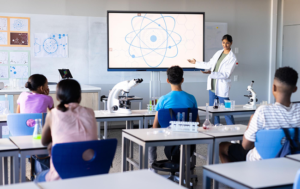
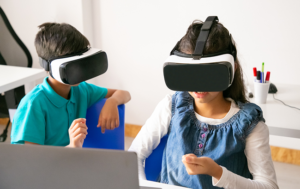
Ideally, in a blended teaching and learning setting, students participate in a variety of online activities, including videos, interactive apps, e-books, and digital collaboration, alongside offline classroom sessions that involve group discussions, presentations, and lectures.
The aim is to create more effective learning experiences and enhance student engagement through a two-pronged approach that is both engaging and instructional.
For an institution like the Vikaasa School, delivering the Cambridge IGCSE programme, blended learning is particularly appropriate: students often need to engage with demanding curriculum content, build strong study habits, and also benefit from face-to-face mentorship. The blended approach offers the best of both worlds.
What are the Benefits of Blended Learning
Blended learning is important for several reasons. For one, it is contemporary and appealing to the way the current generation views education: as digitally enabled and multi-modal. Secondly, it supports modern pedagogical goals, such as personalised learning, student agency, and deeper conceptual understanding.
Some key benefits:
- Flexibility & Adaptability: Students can engage with lecture videos or online resources at their own pace, revisit materials, pause, rewind, and reflect. They still have access to direct instruction when needed. Therefore, it means that learners who grasp concepts quickly can accelerate, while students who need more time can move at a comfortable pace.
- Better accommodation of different learning styles: Blended learning allows for the use of multiple resource types, including gamification tools, interactive apps, collaborative online documents, videos, and e-books. These offer engagement, interactivity and personalised options.
- Enhanced outcomes & engagement: Research shows that, in many contexts, blended learning leads to improved academic achievement and substantial development of self-study skills. For example, one quasi-experimental study found significantly higher achievement, improved attitudes, and enhanced self-study skills in the blended group. Additionally, another meta-analysis in health education found blended learning with computer-assisted instruction produced significantly better knowledge outcomes than traditional learning alone.
- Preparing for the future of learning: In the context of global disruptions, such as the pandemic and increasingly digital workplaces, blended learning equips students with digital literacy, self-regulation and independent learning skills. A recent systematic review noted that blended learning is now one of the most used methods to promote active learning and flexible experiences.
- Optimises teacher time and focus: Since some content delivery can be shifted online through videos, resources, and reading, in-class time can be reimagined, with a greater emphasis on higher-order tasks, such as analysis, synthesis, and collaboration, rather than solely on content transmission. One practitioner noted:
“Instead of lecturing, I now spend my class time helping students develop their skills, such as learning how to write an argumentative claim or how to select evidence.”
Blended learning is especially relevant at the IGCSE level, where students must develop critical thinking, research, and exam skills, rather than just absorbing facts.
Key Models of Blended Teaching & Learning
Blended learning is not a monolithic recipe. There are various models educators can select based on context, resources, and student needs. Here are common ones:
- Flex Model: It primarily focuses on online learning. Students progress at their own pace using online resources. Teachers provide in-person support when needed.
- Rotational Model: Students rotate through different modalities on a fixed schedule. For example, students can choose online station, teacher-led station, group work station, 1:1 tutoring sessions, or paper-and-pen assignments.
- A la carte Model (Self-blend): Students choose between online and in-person classes according to preference/convenience.
- Enriched Virtual Model: The bulk of instruction is online; students come to the physical classroom only when absolutely needed.
- Face-to-Face Driver Model: The in-person instructor-led experience is central; technology is used as a supplement.
Each model has implications for how Vikaasa School designs its programme: what portion of the week is online and in-class, how student progress is tracked, how digital resources integrate with face-to-face mentoring, and how student agency is built.
How Vikaasa School Implements Blended Learning
At Vikaasa School, one of the best schools in Madurai offering the Cambridge IGCSE programme, the blended teaching and learning strategy ensures that each student’s unique learning path is respected and supported. Here’s how:
- Customised Digital Modules: The school provides online lectures, interactive apps, e-books and curated digital content that is in scope with the Cambridge IGCSE curriculum. They are accessible anytime, enabling students to revise, preview, or consolidate concepts at their own pace.
- In-Class Mentoring & Discussion: In the classroom, teachers build on the online modules through group discussion, problem solving, and enrichment activities. The in-person time focuses on higher-order skills, like analysis, collaboration, and personalised feedback, and leverages the teacher as a coach and a mentor.
- Flexible Learning Paths: Recognising that “every student’s learning is a unique process”, the school offers flexibility. Some students engage more heavily with online content (flex or enriched virtual models). In contrast, others require more face-to-face guidance. The differentiated approach ensures that pacing, depth and support meet each learner’s needs.
- Tracking & Feedback Loops: Using their in-house learning-management systems, they monitor student engagement with the online resources (time spent, quiz performance), and triangulate that with classroom performance and teacher observations. It helps adapt the blend (online vs in-person) for optimal progress.
- Support for Learner Autonomy: They also guide students in developing self-study skills, digital literacy and metacognitive awareness. Research shows that learner self-regulation and attitude are significant predictors of success in blended environments.
- Integration Across Modes: The online modules feed into classroom tasks, and classroom discussions reference digital resources.
By combining digital resources, face-to-face interaction, flexible pacing, and continuous monitoring, Vikaasa School ensures that blended learning supports the rigour of the Cambridge IGCSE programme while also catering to individual student growth.
Conclusion
In an education system striving for adaptability, personalisation, and real-world relevance, blended teaching and learning empower students to engage actively, progress at their own pace, and develop critical life skills.
For families seeking a school in Madurai that focuses on global curricula and modern pedagogy, Vikaasa School stands out with its thoughtful implementation of blended learning within the Cambridge IGCSE framework.