
As a parent, you want the very best start in life for your child. But have you ever stopped to ask: what does formal education-meaning really entail, and why does it matter so much? Let us break it down for you in a way that makes complete sense.
India’s school education system serves 24.8 crore students across 14.72 lakh schools, with 98 lakh teachers, according to the UDISE+ 2023-24 report released by the Ministry of Education. That is a staggering scale of structured learning. And yet, many parents still wonder whether enrolment in a school truly sets their child up for life.
What is Formal Education?
Simply put, It is a structured, systematic process of learning that takes place within recognised institutions such as schools, colleges, and universities. It follows a defined curriculum, is delivered by trained and certified teachers, and leads to officially recognised qualifications or certificates.
In India, the National Education Policy (NEP) 2020 has restructured formal schooling into a 5+3+3+4 framework, covering children from age 3 right through to Class 12. This includes the foundational stage (which encompasses Kindergarten and early primary years), the preparatory stage, middle school, and secondary education.
What are Examples of Formal Education?
Examples of formal education include:
- Kindergarten and pre-primary schooling
- Primary school (Classes 1 to 5)
- Secondary and higher secondary school (Classes 6 to 12)
- Undergraduate and postgraduate university programmes
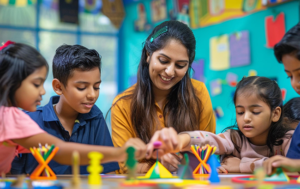
At Vikaasa Schools, for instance, children are guided through each of these stages with a focus on holistic development, academic rigour, and real-world readiness. Whether you are searching for schools for Kindergarten or looking ahead at secondary education, a strong formal foundation shapes every step your child takes.
What Does Formal Education Look Like at Each Stage?
| Stage | Classes / Age Group | Key Focus |
| Foundational | Pre-Primary to Class 2 (Age 3–8) | Play-based learning, literacy, numeracy |
| Preparatory | Classes 3–5 (Age 8–11) | Core subject knowledge, critical thinking |
| Middle | Classes 6–8 (Age 11–14) | Subject specialisation, analytical skills |
| Secondary | Classes 9–12 (Age 14–18) | Board exams, career pathways, higher education |
Why Do Formal Education Benefits Matter for Your Child?
The formal education benefits go well beyond passing examinations. Here is what structured schooling genuinely offers your child:
- Recognised qualifications that open doors to higher education and careers
- A structured environment that builds discipline, routine, and confidence
- Certified teachers who are trained to nurture diverse learning needs
- Social development through peer interaction, teamwork, and collaboration
According to India’s Economic Survey 2024-25, NEP 2020 targets a 100% Gross Enrolment Ratio by 2030. The GER at primary level already stands at 93%, reflecting how widely Indian families value formal schooling. Private school enrolment has also risen consistently, reaching 9.59 crore students in 2024-25, reflecting parents’ growing preference for quality education.
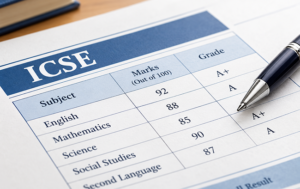
For families in Tamil Nadu, whether you are exploring the best ICSE schools in Madurai or looking for schools in KK Nagar, Madurai, choosing a school rooted in formal, structured education ensures your child receives the best possible foundation.
Frequently Asked Questions
1. What is the difference between formal and informal education?
Formal education happens within accredited institutions and follows a set curriculum leading to recognised qualifications. Informal education, on the other hand, refers to learning that happens through everyday experiences, without any structured curriculum or assessment.
2. At what age does formal education begin in India?
Under NEP 2020, formal schooling in India begins at age 3 with the foundational stage, which includes pre-primary and Kindergarten classes.
3. Is formal education compulsory in India?
Yes. The Right to Education Act guarantees free and compulsory education for all children between 6 and 14 years of age. NEP 2020 has extended this vision to include early childhood education from age 3 onwards.
4. How does formal education prepare children for the future?
Formal education equips children with academic knowledge, critical thinking skills, social competencies, and recognised credentials that are essential for higher education and career opportunities.
Choosing the right school is one of the most important decisions you will make for your child. At Vikaasa Schools, we believe that great formal education builds not just knowledgeable students, but confident, curious, and compassionate human beings.
Explore what we offer at our school in our website and take the first step towards giving your child a future full of possibilities.