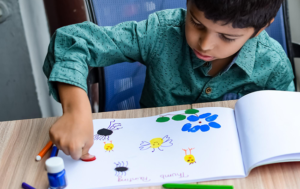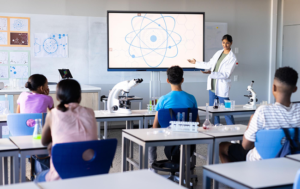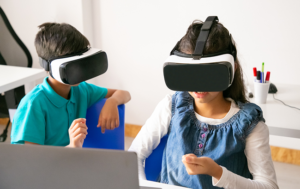
For so long, we have been taught to scoff at anything that was not scored or evaluated, especially those involving academics. School meant learning math, science, and language, taking exams, securing good grades, advancing to higher studies, and repeating the process.
But there is so much more to education than it meets the eye. Students spend one-third of their lives at school, and schools have a higher responsibility in building a reputable future for them. It does not solely come with academia.
That’s where holistic education comes into the picture. It helps children develop emotional maturity, cognitive capabilities, social skills, and physical fitness to sustain long-term challenges in life.
The blog aims to explain what holistic education is and its benefits for both academic and personal success.
What is Holistic Education
Holistic education is an educational philosophy that emphasises the comprehensive development of individuals by integrating intellectual, emotional, social, physical, and spiritual growth, instead of concentrating solely on academic achievement.
That means students learn to acknowledge that they belong to respectable communities, have a duty to serve them, and apply their learning to whatever situations life puts them under.
The Core Components of Holistic Education
Intellectual Development
Holistic learning encourages critical thinking, problem-solving, and creativity. Students learn to connect ideas across subjects and apply knowledge to real-world challenges.
Emotional and Social Intelligence
Emotional intelligence allows individuals to navigate interpersonal relationships, resolve conflicts, and handle stress effectively. Schools incorporating mindfulness exercises help students become more self-aware and empathetic.
Physical Well-being
Physical development encompasses body awareness, nutrition, and self-care practices, enabling students to understand how their choices impact their focus and energy throughout the day.
Connecting with the Community
Holistic education teaches students that they are part of a larger whole. There is an emphasis on caring for the environment and looking out for one another, fostering a sense of responsibility toward their communities.
What are the Benefits of Holistic Education
1. Improved Academic Outcomes
Research challenges the myth that holistic approaches compromise academic rigour. A longitudinal study conducted across 78 centres in 21 Indian states found that holistic educational components increased the likelihood of achieving grade-level reading proficiency by 25% and grade-level writing proficiency by 63%.
The digital learning component alone contributed to a 0.5% average weekly literacy gain, proving that composite approaches enhance academic success. Similarly, in South India, especially in Madurai ICSE schools, the dropout rate has decreased significantly after implementing holistic education in their pedagogy.
2. Enhanced Emotional Stability
Holistic education incorporates mindfulness exercises, yoga, environmental activities, cultural programs, cleanliness drives, and substance abuse ambassador programs into daily routines, helping students become more self-aware and empathetic. It enhances classroom behaviour and equips students with the tools to maintain mental and emotional well-being throughout their lives.
3. Better Student Engagement
Students in holistic educational programs show dramatically different attitudes toward learning. In Ethiopia’s Speed Schools, 75% of formerly dropped-out students remained enrolled compared to 61%-66% of students who did not attend. They developed confidence to participate actively in lessons, even in less ideal and interactive environments.
4. Assertive Life Skills
With more hands-on, experiential activities and less emphasis on lectures and rote memorisation, students get better opportunities to practice creative problem-solving and hone their collaboration and communication skills.
5. Reduced Behavioural Issues
Holistic models are invaluable during the middle school years for building self-awareness, empathy, and relationship skills that children need to navigate this stressful, confusing, and transitional period. According to StopBullying.gov data, 31% of bullying occurs in sixth grade, making it a critical period for interventions that address emotional and social development.
How Vikaasa Enables Holistic Education
With over 55 years of legacy in shaping the education system, Vikaasa, one among the best schools in K.Pudur, Madurai, exemplifies what holistic education looks like in practice. The institution strikes a balance between academic excellence and comprehensive student development.
- Teachers provide personalised support across studies, projects, labs, and exam preparation.
- The school environment encourages students to explore freely, think critically, and ask questions without fear of judgment.
- Vikaasa offers programmes based on the prestigious Cambridge IGCSE board alongside ICSE and ISC curricula, providing character development and life skills.
- Students develop skills across diverse domains, such as sports, arts, music, community service, and leadership activities, which become integral parts of their growth journey.
- Annual events, such as the Youth Festival and cultural programs, help develop students’ overall personality – clubs for quiz, puzzles, music, cookery, gardening, science, and computer.
- The modern campus boasts spacious classrooms, a well-stocked library, state-of-the-art computer labs, and reliable transportation, creating a safe and secure environment and still enabling students to take risks and learn from failures.
Long-Term Effects of Holistic Education
Research indicates that practical holistic approaches within education systems lead to improved academic, health, employment, societal and well-being outcomes across all countries. Students exposed to holistic education tend to make wise financial investments, consistently leading to improved long-term life outcomes.
They become global leaders solving the world’s developmental, environmental, economic, and social issues. Students in holistic education programs don’t view their time at school as an obligation. They see it as an opportunity for lifelong learning, connecting their classroom experiences with their life goals.