
What makes some children keep turning pages while others stop after a few lines? The secret is not talent but practice. Kids who build good reading habits for students gain focus, sharper memory, and better learning skills.
Parents and teachers often wonder how to guide them. The real answer is simple steps that last. But the bigger question remains: how to develop a reading habit in students so that reading turns into a lifelong strength? Let’s break it down.
Importance of Developing Reading Habits in Kids
Books give children new worlds to walk into. A story shows them courage, kindness, and even mistakes worth avoiding. Reading sharpens focus, improves memory, and widens vocabulary. Parents and teachers often notice that kids with good reading habits perform better in exams, write clearly, and speak with confidence.
At schools in India, including the cambridge education board or even IGCSE syllabus schools in Madurai, libraries are not just shelves of books, they are gateways. A child who loves reading carries that advantage everywhere.
-
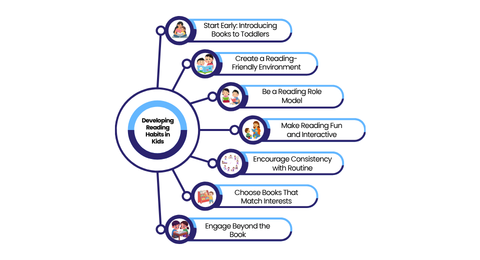
Start Early: Introducing Books to Toddlers
When toddlers see colourful pictures, they feel curious. Picture books with large fonts, sounds, and textures keep them engaged. Reading aloud works like magic; it adds rhythm and tone, which children remember long after.
Parents who read one small story every night often notice the child asking for another. Even five minutes before sleep builds rhythm. This habit grows quietly, like watering a plant every day.
-
Create a Reading-Friendly Environment
Children read more when books are visible. A small shelf at their height works better than one tucked away. Add cushions, a lamp, and silence. The feel of the space matters.
In homes with noise, setting a fixed reading corner helps. At schools, teachers who decorate reading walls with student book reviews encourage curiosity. A corner with posters and piles of storybooks says, “Pick me up.” That gentle nudge often works better than a strict order.
-
Be a Reading Role Model
Children copy what they see. If parents scroll on their phones all day, kids notice. If parents read newspapers, novels, or even comics, kids mirror that. Teachers, too, when a teacher reads during free time, students respect it.
Reading aloud together works even better. Parents can read one page, then let the child try. That shared rhythm builds connection. And yes, mistakes in reading are fine; they show effort.
-
Make Reading Fun and Interactive
Stories grow stronger when they come alive. After finishing a story, ask: “What do you think happens next?” or “Which character do you like least?” A book turns into a conversation.
Kids also enjoy acting out scenes. A simple play from a story makes the words stick. Add voices, add sound effects, even small drawings on paper. Reading becomes less of a task and more of a game.
-
Encourage Consistency with Routine
Consistency beats big effort. A set time daily creates flow. Even ten minutes matter if done every day.
| Time of Day | Activity | Effect |
| Morning before school | Short story or poem | Keeps the mind fresh |
| After lunch | Comic strip or picture book | Light, fun, no pressure |
| Evening | Homework-related reading | Builds study link |
| Bedtime | Bedtime story | Calms and relaxes |
This table shows how families can fix simple slots. When kids expect reading at the same time, it becomes natural.
-
Choose Books That Match Interests
A cricket-loving child may not sit with a history book but will happily read “Sunny Days” by Sunil Gavaskar. Kids who love animals may start with “The Jungle Book” or Ruskin Bond’s short animal tales.
Fantasy lovers can dive into “Harry Potter” or “Percy Jackson.” Those curious about space may enjoy “George’s Secret Key to the Universe.” Matching interest to the book avoids resistance. It’s like choosing the right snack; you give what they like, not what you like.
-
Engage Beyond the Book
Reading does not stop at the last page. Ask children to draw one scene, write one line about a character, or even retell the story to grandparents. This extra step deepens memory.
When families discuss books at the dinner table, children realise reading is not private, it’s part of daily talk. That shift changes everything. Even schools in smaller areas like schools in Villapuram Madurai run reading clubs to spark this habit.
How to Overcome Reading Challenges in Kids
Not all children pick up reading easily. Some struggle with focus, others find words too hard. Start with simpler texts, maybe even comics. Large fonts, pictures, and fewer pages reduce fear.
Parents should avoid scolding. Instead, celebrate small wins: one page today, two tomorrow. If reading feels forced, kids turn away. Keep patience. In India, even the best schools in Madurai remind parents that slow readers can still be strong thinkers. Progress is gradual but steady.
Final Thoughts
Children need reading as much as they need play. A strong habit gives them words, ideas, and imagination that no screen can replace. Schools, teachers, and families share this job together. The real trick lies in starting small, staying steady, and making it joyful.
If you want your child to grow with strong reading skills, Vikaasa is here to guide you. Discover how to develop a reading habit in students, which can change learning forever, enrol today at Vikaasa.