
Did you know that students perform better when parents actively join school activities? A meta-analysis of over 440 studies covering more than 480,000 families revealed that parental involvement boosts academic results, motivation, and social growth, no matter the child’s age, background, or economic status.
These students not only score higher but also stay in school longer and behave better in class.
But schools often struggle to bring parents in. Some try with meetings or flyers, and then wonder why nothing changes. The truth is, the approach involving parents in school needs a deeper, practical approach that respects time, culture, and trust. Let’s break it down.
Why Parental Involvement Matters
When parents show up, students feel school is important. Teachers also feel more supported. Parents become partners in the child’s learning, not just visitors. This builds a stronger learning circle.
Also, schools with high parent engagement often see better attendance, behaviour, and exam results. Teachers also notice fewer classroom disruptions. When home and school walk the same path, children follow confidently.
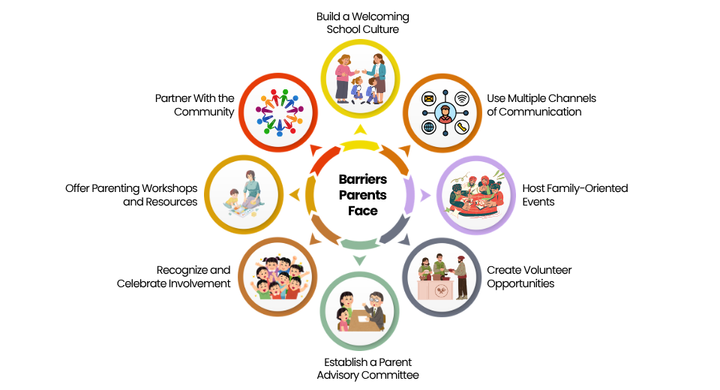
Understand the Barriers Parents Face
Before expecting more from parents, we must understand why they hesitate. Some may feel schools are not friendly enough. Others worry about language, timing, or lack of confidence.
Many working parents in India simply cannot attend events during weekdays. Single parents or those without help at home find it even harder. Also, past negative school experiences can make some parents keep their distance.
-
Build a Welcoming School Culture
Create a space where every parent feels accepted. Greet them by name. Speak in simple language. Offer tea during meetings. Let parents know they are part of the team, not outsiders.
Encourage class teachers to check in regularly, not just during exam time. A friendly message can build more trust than a formal notice.
-
Use Multiple Channels of Communication
Not all parents use email or school apps. Some prefer WhatsApp or phone calls. Others may want printed circulars. Respect these preferences.
Also, communicate in local languages where possible. Use charts or images in newsletters. Keep the tone respectful and clear.
-
Host Family-Oriented Events
Invite parents to fun events, not just formal meetings. Try food festivals, art days, or cultural shows. Add simple activities where parents and children do things together. This brings families closer to school in a relaxed way.
Events can also showcase student work. Let parents feel proud, not pressured. It builds confidence in the school’s environment.
-
Create Volunteer Opportunities
Offer small, flexible tasks. Invite help with library sorting, traffic duty, or organising school days. Make sure to guide parents clearly.
Volunteering makes parents feel useful and needed. It also helps them understand how school works. These are small steps toward parent involvement in schools.
-
Establish a Parent Advisory Committee
Involve a mix of parents across grades and backgrounds. Let them give ideas and feedback. Meet monthly, even for 30 minutes.
Keep it less formal. Encourage open talk. Listen more. This builds mutual respect. It also allows parents to share what others may be thinking silently.
-
Recognize and Celebrate Involvement
Say thank you. A simple certificate or mention in the newsletter works. Appreciate even small efforts. Recognition motivates repeat involvement.
Also, share success stories during assemblies or staff meetings. Let everyone see the link between parent engagement activities and student progress.
-
Offer Parenting Workshops and Resources
Organise short sessions on topics like study habits, teen behaviour, or safe internet use. Keep it interactive. Avoid preaching.
Also, hand out printed tips or offer quick videos on WhatsApp. Make it easy for parents to use what they learn at home.
If your school follows the ICSE board LKG syllabus, consider offering orientation sessions to help parents understand early learning goals and how to support them at home.
-
Partner With the Community
Involve local businesses or NGOs. A nearby doctor can speak on health. A parent who is a lawyer can talk about safety laws. Even a local farmer can explain water-saving to students.
This expands learning beyond the classroom. It also brings pride to the community. In Villapuram, where schools aim for growth, this model can bring better parent-school links.
Examples of Parent Engagement Activities
| Activity Type | Description |
| Reading Day | Parents read books to classes |
| Career Talks | Parents share what they do for a living |
| Skill Sharing | Handicraft, cooking, or gardening sessions |
| Support Circles | Small group talks on parenting topics |
| Festival Helpers | Parents help organise cultural events |
| Open Art Displays | Students and parents display artworks together |
Importance of Parental Involvement in Education
Studies show again and again that the importance of parental involvement in education cannot be ignored. Children do better when families and schools stand together.
In India, many schools in Villapuram Madurai and beyond are now trying new ideas to boost parent engagement in schools. They are seeing results, especially when efforts go beyond academics.
When schools support families and families back the schools, both sides win.
Final Thoughts
Teachers in India can shape the future by learning how to encourage parent involvement in schools step by step. Start with empathy. Respect each family’s situation. Try one new idea each term. The results will come slowly but surely.
Ready to build stronger parent-school ties? Contact us to see how we support schools like yours. Share this with your friends and family who care about children’s growth and education.