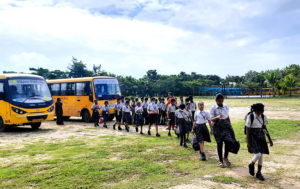

For children, the school bell for recess is the best sound of the day. It means freedom, laughter, and the excitement of the playground. For parents, though, it can bring worry about scrapes, falls, and all the possible risks.
Physical activity is essential for children’s growth. Dr Kenneth Ginsburg, a paediatrician and spokesperson for the American Academy of Paediatrics, explains in his report “The Importance of Play in Promoting Healthy Child Development” that play is key to children’s cognitive, physical, social, and emotional well-being. Still, the setting where play happens is just as important.
When choosing a school, many parents wonder: How safe are playgrounds and sports facilities in Madurai schools?
Let’s look at what makes a safe play area and how schools like Vikaasa work to keep children safe as they play.
-
Play Surfaces are Important for Safety
The U.S. Consumer Product Safety Commission reports that almost 70% of playground injuries happen when children fall to the ground. It shows that the most critical safety feature is not the slide, but the surface underneath.
Concrete and asphalt are unsafe and no longer recommended. Safe playgrounds use surfaces like rubber mats, synthetic turf, or thick wood chips. These materials help cushion falls and lower the risk of head injuries or broken bones.
Vikaasa pays special attention to the flooring in play areas. In pre-primary classes, they use soft surfaces to support toddlers as they learn to walk. The goal is to help children enjoy running without worrying about falling on a hard surface.
-
Equipment Integrity and Maintenance
A playground is only safe if it is well-maintained. Neglected sports facilities can become dangerous, with rusty bolts, splintered wood, or unstable equipment leading to accidents. Regular inspections are essential.
Pediatric safety experts advise parents to check for entrapment hazards, which are gaps where a child’s head or fingers could get stuck, and for “pinch points” on moving equipment like seesaws.
Vikaasa focuses on proactive maintenance. From the jungle gym for young children to the basketball courts for older students, their facilities are regularly checked for safety. The nursery environment is kept spotless so children can explore without worrying about equipment issues.
-
The Critical Role of Supervision
Even the safest playground needs adults to watch over the children. A study in the Journal of Pediatric Psychology found that active adult supervision significantly reduces risky behaviour on playgrounds.
Playground safety for kindergarten requires teachers who are trained to watch, step in, and guide children as they play.
When looking at preschools in Madurai, ask about the student-teacher ratio during recess. Vikaasa ensures there are enough staff during breaks. Teachers are trained to identify and prevent problems before they occur, and they teach students how to use equipment safely.
Active supervision allows children to try new things, such as climbing higher, while knowing adults are there to help.
-
Age-Appropriate Zoning
Injuries often happen when toddlers try to use equipment meant for much older children. Children’s physical abilities vary greatly at different ages.
The National Program for Playground Safety recommends separate areas for ages 6 months to 23 months, ages 2 to 5, and ages 5 to 12.
At Vikaasa, play areas are carefully separated by age. Nursery students have their own play space, away from the sports fields for older children. It helps prevent accidents and gives everyone room to play safely at their own speed.
-
Teaching “Safety at Play” to Students
Safety is not only about equipment; it is also about how children think. Kids need to learn how to judge risks. That means following simple rules, like not pushing on the slide, waiting for the swing to stop before crossing, and watching out for friends.
Tips for Parents
- Check the Temperature: In Madurai’s hot weather, metal slides can get very hot. Teach your child to test the slide with the back of their hand before sitting down.
- Dress for Play: Remove necklaces or drawstrings that could get caught on playground equipment.
- The “Feet First” Rule: Show children to always go down slides feet first to keep their heads safe.
Conclusion
No place is completely free of risk, but schools that focus on good equipment, regular maintenance, and close supervision give children a safe place to grow and enjoy themselves.
At Vikaasa, teachers are dedicated to offering safe playgrounds and excellent sports facilities. The lessons children learn on the playground, like perseverance, making friends, and being brave, are just as important as what they learn in class.
Let’s make sure our children are safe and able to keep playing.