
Some students look at the science book and sigh. Too many pages, too much to mug up. But the same kids get excited when they see a balloon stick to the wall or a bottle rocket shoot up.
That’s the point, science is not boring, it’s about making ideas come alive. The issue is not the subject; it’s the way it gets taught. Here’s how to make science fun for students.
Why It’s Important to Make Science Fun
Science is everywhere, from the mobile in your hand to the food on the stove. But if the subject feels boring, many students drift away. They start to memorise without asking questions. That is dangerous because science is about curiosity.
Schools in Anna Nagar Madurai, and other cities face the same issue: keeping young minds hooked. When science is fun, memory improves, and learning feels natural.
1. Use Hands-On Experiments
The surest way to make students enjoy science is through touch, smell, and sound. A simple bottle rocket flying in the air excites more than ten pages of textbook theory. Teachers can add fun science experiments to weekly lessons.
Bullet ideas for classrooms:
- Grow a small plant inside a plastic bottle and track growth every day.
- Test which liquids clean coins fastest.
- Make a balloon stick to the wall with static charge.
These fun easy science experiments build memory and also teamwork. A group of children solving a tiny puzzle often learn faster than taking notes.
2. Gamify the Learning Process
Games turn dry ideas into energy. If children can play, they learn quicker. For example, periodic tables can be taught like a card game. Students earn points for matching elements with their uses.
| Game Idea | What It Teaches | How It Works |
| Element Bingo | Chemical symbols | Students mark elements on a sheet when called |
| Quiz Race | Physics basics | Two teams answer fast rounds of short questions |
| Lab Treasure Hunt | Safety rules | Clues hidden around the lab are linked to safety steps |
Gamification makes classrooms lively, but it also builds healthy competition. And parents from play schools in Madurai to higher grades know children remember best when fun meets challenge.
3. Incorporate Storytelling in Science Lessons
Stories make everything stick. Instead of saying Newton found gravity, tell how an apple thudded to the ground. Let students picture the sound and his sudden thought. When teachers connect science with human stories, the subject breathes.
Even Cambridge curriculum classrooms use story-based models to explain evolution, space travel, or medicine. Children love listening, and once the story ends, the concept is already stored in memory.
4. Take Learning Outside the Classroom
Walls limit imagination. A walk in the garden can explain photosynthesis better than five blackboard notes. Let kids hear the buzz of bees, feel the warmth of the sun, and smell the flowers while discussing pollination.
Best international schools in Madurai often use field trips as an extra subject tool. But even a small outing, like measuring the length of shadows in the playground, turns learning into fun.
5. Use Technology and Multimedia
Screens are part of every child’s life. In India, children under five already spend about 2.22 hours daily on screens, more than twice the suggested one hour. Instead of fighting screens, teachers can redirect them.
Use virtual labs, animated models, or interactive videos to explain tough concepts. A moving model of the solar system makes planets real, not flat circles on paper. Students are anyway drawn to technology, so let it serve science.
6. Encourage Creative Projects
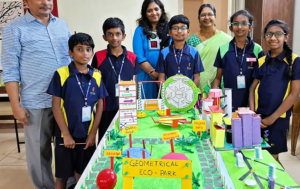
Projects give space to think. Let children design their own model of a water filter using sand and pebbles. Or ask them to create posters about climate change with small solutions. These fun science activities give space for imagination.
Examples:
- Build a mini windmill from cardboard.
- Create a solar oven with foil and black paper.
- Draw food chains with colourful pictures.
These tasks are not about scoring marks but about connecting science to everyday life.
7. Connect Science to Everyday Life
The real question students ask is simple: “Why should I learn this?” Show them answers in daily life. Electricity lessons can connect to the fan running at home. Biology can link to the taste of mangoes in summer.
Chemistry can explain the fizz sound of soda. When children see science around them, they stop asking why and start asking how. And that is the bridge how to learn science better.
Final Thoughts
Science does not have to be dull. With experiments, games, projects, stories, and smart use of screens, students learn faster and smile more. If you want to know how to make the science subject more interesting, then remember, show, not just tell.
Let children question freely, let them make mistakes, and let them connect what they read in books with what they see in daily life. At Vikaasa, we believe the secret how to make science fun for students is in keeping curiosity alive. Plan your visit today and see how science can stay exciting.