
A football field on a hot day tells you more about teamwork than a textbook ever can. One player runs, another passes, someone else defends. The whistle cuts the air, and suddenly, it’s not about the individual anymore. It’s about moving together.
The same idea works in classrooms, playgrounds, and even homes. How do sports teach teamwork to students who often think winning is only about personal effort? Let’s break it down.
The Importance of Teamwork in Student Life
Every student in India grows up facing group tasks, school projects, cultural events, or sports day. Without cooperation, none of these runs smoothly. That is where the importance of teamwork comes in. It teaches young people to value effort beyond their own.
- Students learn to share both wins and losses.
- They discover patience while waiting for their chance.
- They adapt when plans fail, yet the team has to continue.
Teachers in ICSE schools in Madurai often say that group learning creates stronger bonds. Sports add a practical dimension to this idea. They are fast, unpredictable, and force every child to stay alert for the team.
How Sports Build Communication Skills
Before a cricket bowler releases the ball, signals move quietly, eye contact, hand signs, and nods. These little actions build an unspoken language. Sports sharpen how students talk and listen to one another.
1. Quick Instructions Under Pressure
On the pitch, words are short. “Pass here.” “Mark him.” These instructions train students to speak clearly and save time.
2. Reading Body Language
Players understand each other without speaking. A striker looks up, a defender shifts, and the game flows. Students carry this skill back to group projects in class.
3. Respecting Different Voices
Not everyone in a team thinks alike. Yet, respecting opinions makes strategies stronger. Students realise silence also speaks.
A Table View of Sports and Communication
| Sport | What Students Learn | How It Helps in Life |
| Football | Short calls and signals | Fast decision-making |
| Basketball | Continuous passing and feedback | Clear, constant communication |
| Volleyball | Trusting who calls the ball first | Respecting roles |
| Hockey | Eye contact and quick directions | Reading non-verbal cues |
In many schools in Koodal Nagar, Madurai, coaches point out that students who play team games often become natural leaders in classroom discussions too.
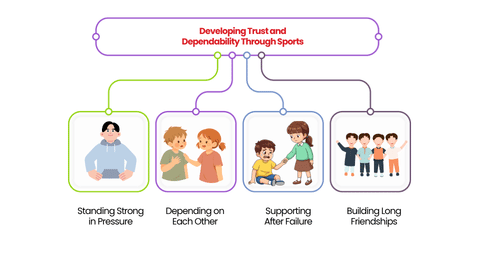
Developing Trust and Dependability Through Sports
Every game teaches trust. A goalkeeper trusts defenders. A batsman trusts the partner to call runs honestly. Without trust, confusion ruins the match.
1. Standing Strong in Pressure
When the score is close, trust keeps the team calm. Students realise pressure is lighter when carried together.
2. Depending on Each Other
Players don’t win alone. They depend on team members to cover mistakes. This dependence slowly turns into reliability.
3. Supporting After Failure
Sometimes a pass is missed or a goal is lost. Teammates clapping on the back show that no one stands alone. That attitude flows back into friendships, too.
4. Building Long Friendships
Shared struggles create bonds. Many students say that friends from sports stay closer than others. Dependability is the root of such long ties.
Even children in pre-primary education begin to copy this when they clap for classmates in small races or simple relay activities.
These small actions quietly remind students of the importance of team building, where trust is not a theory but a lived practice on the ground.
Learning to Handle Roles and Responsibilities
Sports do not give the same role to everyone. Some defend, others lead, and some support quietly in the back. Understanding these roles prepares students for real life.
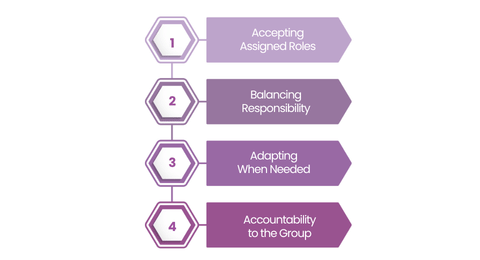
1. Accepting Assigned Roles
Not every student can be a captain. When sports assign roles, children learn acceptance without feeling smaller.
2. Balancing Responsibility
A captain must motivate, while a goalkeeper must stay alert. Balancing different jobs shows how responsibility varies yet matters equally.
3. Adapting When Needed
Injuries or absences force quick changes. A striker might defend, or a substitute may step up. Students adapt and learn flexibility.
4. Accountability to the Group
When a mistake happens, the whole team faces it. Accountability becomes natural. Students stop blaming and start improving.
Sports under the IGCSE curriculum highlight this idea by rotating roles in certain drills, so every child understands leadership and support equally.
Long-Term Benefits of Teamwork Skills Beyond School
The value of sports teamwork stretches far beyond the playground. When students step into careers, these habits become assets. The benefits of sports for students are lifelong.
- Stronger workplace communication.
- Ability to stay calm during group deadlines.
- Respect for colleagues’ skills.
- Better confidence in decision-making.
These lessons are less about winning and more about survival in real situations. Corporate offices, family life, and even community events reflect the same teamwork patterns students learn in school games.
Final Thoughts
So, how do sports teach teamwork? They do it by showing, not telling. On the ground, every student feels unity, trust, and the push to rise together. That lesson is priceless for life.
At Vikaasa, we believe such lessons shape both the classroom and the playground. Book your child’s visit today and see how teamwork transforms learning.